Sourcing Griffon Tack & Arcane Saddles with RFQs and Vendor Scoring in Dynamics
From the sky patrols of Waterdeep to the noble riders of Silverymoon, airborne units depend on highly specialized gear—Griffon Tack and Arcane Saddles that can withstand battle, weather, and the raw magical forces of the Realms. These aren’t items you pick up at the local market; they’re sourced through formal procurement strategies, powered by Request for Quotation (RFQ) and Vendor Scoring capabilities in Dynamics 365.
Why RFQs Matter in a Magical Economy
In a traditional D&D setting, most trading happens face-to-face—often over a tankard. But for larger organizations like the Waterdeep Trading Company (WDTC), bulk procurement must be structured, especially for gear involving magical enchantments or rare components.
Example:
The City Watch of Waterdeep needs 20 arcane saddles for a newly commissioned unit of griffon riders. Each saddle must support:
- Up to 300 lbs of armored weight
- A built-in Feather Fall enchantment
- Compatibility with Griffon Tack forged from mithral-reinforced leather
Rather than asking each vendor individually, WDTC uses the RFQ system in Dynamics 365 to issue a formal request to certified suppliers.
Vendor Scoring: Objectivity Over Tradition
Craftsmanship and enchantment vary wildly between Faerûnian vendors. By using vendor scoring models, the trading company can evaluate vendors using criteria beyond price—ensuring quality and safety remain paramount.
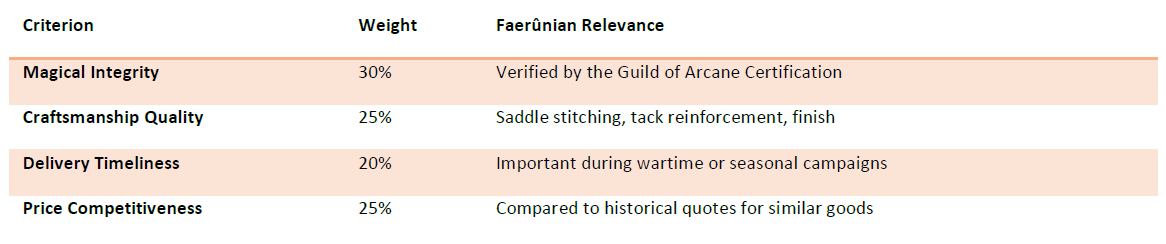
Example Scorecard Weights:
Vendor Examples:
- Baldur’s Gate Blacksmiths Guild: High in craftsmanship, but slower due to unionized processes
- Luskan Flight Outfitters: Cheaper, but known for occasional magical instability
- Neverwinter Skywrights Consortium: Moderate cost, consistent arcane compliance
Dynamics 365 applies these weights automatically to submitted RFQ responses, giving procurement officers an instant comparison across all key factors.
The Griffon Gear Commodity Category
In the WDTC product catalog, Griffon gear falls under structured commodity codes like:

These categories help align products to procurement hierarchies, trade agreements, and vendor capabilities.
Strategic Procurement Outcomes
Implementing RFQ and vendor evaluation processes provides tangible advantages in the Faerûnian economy:
- Better Risk Mitigation: Buying from the wrong enchanter can literally be fatal. RFQ processes flag unqualified vendors before the deal is struck.
- Improved Guild Compliance: Vendor scoring ensures only members of certified guilds (e.g., the Enchanters’ Hall or Leatherworkers’ Syndicate) win bids—limiting counterfeit products.
- Data-Driven Supply Decisions: Should you pay more for reliability, or risk a lower-cost vendor with a poor delivery record? The answer lies in the scoring history, available instantly in Dynamics 365.
Real-World Fantasy Use Case: The Autumn Campaign Order
In the lead-up to the Autumn Griffon Campaign of 1495 DR, WDTC receives a bulk order from the Lords’ Alliance:
- 50 Arcane Saddles
- 100 Reinforced Griffon Tacks
- Delivery deadline: Marpenoth 15
Using Dynamics 365:
- RFQs are issued to five certified vendors across Baldur’s Gate, Silverymoon, and Yartar
- Responses are scored, evaluated, and logged
- Final purchase orders are generated and linked to trade agreements for future replenishments
Outcome: The entire contract is awarded to Skywrights Consortium of Neverwinter, who delivered ahead of schedule, scoring 92/100 in the vendor evaluation matrix.
Final Thoughts
In a realm of dragons, danger, and divine audits, your procurement process should be as fortified as your defenses. With RFQs and vendor scoring in Dynamics 365, even the most magical acquisitions can be approached with logic, structure, and transparency.
Explore More Procurement Templates and Demo Content at adnd365.com/start
Because in Faerûn, even saddles deserve a little enchantment—and a lot of due diligence.
 A Tinkerers Notebook