Tracking Guilds Across Faerûn: How the Waterdeep Trading Company Manages the True Powers Behind the Trade
In Faerûn, no successful merchant operates alone. Behind every cartload of enchanted textiles or barrel of trollwine stands a guild – documenting, inspecting, regulating, and, when necessary, demanding compensation. These are not advisory councils or informal collectives. They are the law in most cities when it comes to tradecraft, labor, pricing, and apprenticeships.
At the Waterdeep Trading Company, guilds form the foundation of our entire supply network. From the warehouses of Silverymoon to the docks of Calimport, our ability to do business depends on how well we manage, track, and respect these institutions.
What Is a Guild in Faerûn?
To an outsider, a guild may look like a club of craftsmen. To a merchant, it is a governing body. Guilds in Faerûn:
- Regulate Pricing: They set base prices and forbid undercutting or overpricing.
- Enforce Quality Standards: Products bearing the guild seal meet standards of safety, craftsmanship, and purity.
- Manage Apprenticeships: Only members of a guild can legally train new workers in a trade.
- Control Certification: From spell-tuned brewing to adamantine shaping, guilds determine who is licensed to work in a craft.
- Settle Disputes: Guild arbitration often supersedes civil courts in trade matters.
- Oversee Regional Chapters: Each major city has a chapter following the central charter while adjusting for local needs.
Organizing Guild Information in Your Company
To manage guilds effectively, companies like ours treat each one like a partner, with structured records and established procedures.

Guild Directory Examples
Here are a few of the more prominent guilds the Waterdeep Trading Company works with:
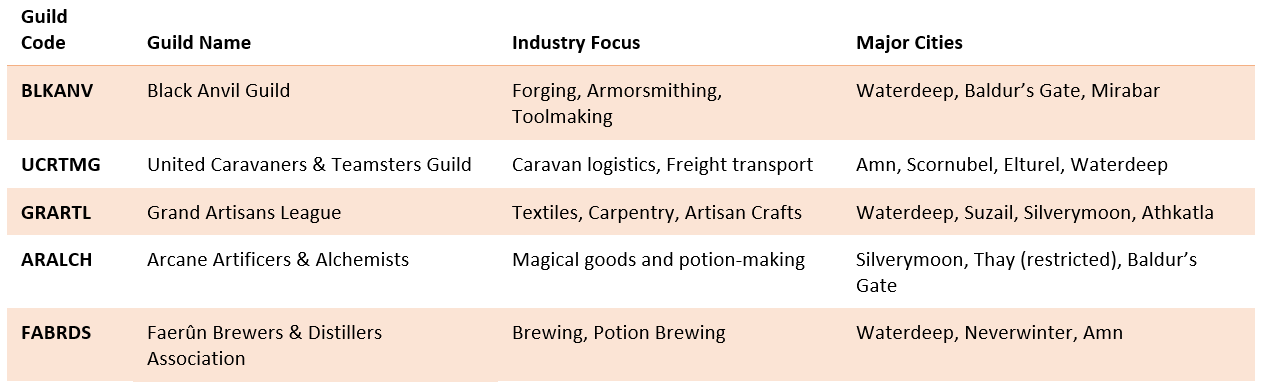
Guilds govern not just trade but talent. If you want to hire a certified loommaster, a leyline-calibrated enchanter, or a crystal alchemist with reliability, guild records are your best friend.
Merchants should track:
- Certification Validity (including expiration and issuing chapter)
- Completed Apprenticeship Logs (trainer, craft, rating)
- Advancement Requests (for promotion to master rank or guild chair)
- Guild Exams (success rates and focus areas)
By doing this, you can ensure you’re always working with approved craftsmen and that your wares pass muster when they reach port inspectors.
Managing Guild Contracts
Contracts with guilds are not one-size-fits-all. A shipping agreement with the Teamsters may include:
- Volume quotas
- Minimum wage requirements
- Safety and magical seal inspections
- Contingency routes for high-risk regions
- A procurement agreement with the Black Anvil Guild might include:
- Fixed pricing tiers for steel or mithral goods
- Priority supply in wartime
- Enchantment inspection clauses
Track these by guild, chapter, and effective date—and always be aware of when a renegotiation period is due.
Dispute Resolution and Compliance
Most cities allow guilds to enforce their own rulings within their domain. When a dispute arises:
- Arbitration is often mandatory
- Guild fines may be binding on the merchant
- Disciplinary actions (such as blacklisting) can affect all affiliated trade
Maintain detailed logs of:
- Complaints filed
- Guild responses
- Resolution terms
- Any modifications to contracts or certifications following the ruling
This protects your company and helps build a reputation as a guild-respecting trading house.
Guild Reporting and Oversight
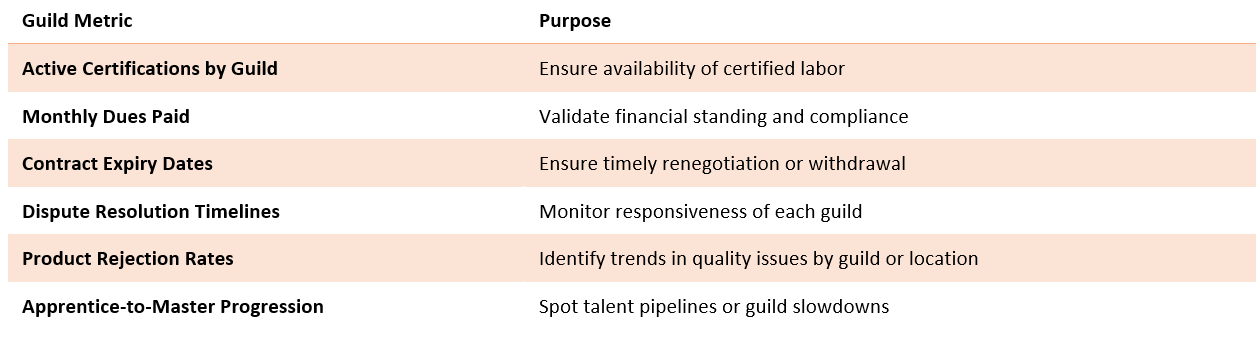
Larger operations should develop guild reporting practices. Here are a few metrics we track:
Final Thoughts: Why Guilds Deserve Respect
Guilds don’t just protect craftsmen—they protect the economy. They ensure that products move fairly, workers are trained properly, and that bad actors can’t flood the market with cursed tankards and half-finished crossbows.
For a trading company, building strong, respectful, well-documented relationships with every guild you work with isn’t just a best practice—it’s the key to staying in business.
Want to start managing your guild partnerships better? Check out the guides at adnd365.com/start and explore the public demo environment at https://public.adnd365.com, using:
Login: npc@adnd365.com
Password: N0nPl@yC#822!
 A Tinkerers Notebook