Archive

Author Archives: B-List Microsoft Celebrity, Available for Weddings and Bar Mitzvahs

In the thriving trade cities of Waterdeep, Baldur’s Gate, and beyond, merchants often find themselves at a loss not from theft or misadventure but from failing to account for the true cost of their imports. That’s where understanding landed cost comes in.

Whether you’re bringing in saffron from Calimshan, dwarven steel from Mithral Hall, or elven wine from the Salington Vinyards, knowing your full landed cost is the difference between profit and peril.

What Is Landed Cost

Landed cost is the total expense incurred to bring a product from its source to its final destination not just the vendor’s price. It includes:

  • Base purchase cost
  • Transport fees (caravan, barge, airship, or teleportation)
  • Import duties and tariffs
  • Handling, inspection, and insurance
  • Security (escorts, guards, bribes if necessary)
  • Currency exchange losses or fees
  • Magical sealing, warding, or scrying

These additional costs accumulate through every step of the product’s journey and they must be calculated if a merchant is to determine the real price of their inventory.

Sample Landed Cost Breakdown: A Faerûnian Case Study

Let’s say the Waterdeep Trading Company imports Sake Rage from Salington Vinyards in Neverwinter.

A merchant who sells the sake based solely on the 260 FSD supplier price may think they’re earning 20 percent margin. In truth they may barely break even or worse.

Why Landed Cost Matters

  • Proper Pricing Without it prices are based on illusion not reality
  • Trade Route Evaluation Understanding which routes magical or mundane offer better margins
  • Profitability Forecasting A true picture of earnings requires full cost awareness
  • Product Comparison Knowing full cost helps compare multiple suppliers not just their invoice price

Common Faerûnian Costs to Consider

Best Practices for Faerûnian Merchants

  • Track each cost layer no matter how small Even a 5 FSD handling fee can add up across shipments
  • Use standard units like FSD per crate or bottle for consistency
  • Build buffer margins into your pricing to account for lost goods taxes or delays
  • Plan seasonally Snow in the Spine of the World Expect freight delays and added guard fees
  • Maintain supplier scorecards with both base and landed cost to spot hidden costs

Final Thoughts

In the end savvy trade in Faerûn isn’t about knowing the lowest price it’s about understanding the total price. Whether your goods travel by foot hoof keelboat or leyline calculating landed cost is your secret weapon in staying competitive and profitable.

Want to simulate shipping strategies in Faerûn or model transportation operations in Dynamics 365?

Get your own AD&D365 Environment and guides at adnd365.com/start, and request access to the public view of the current database at https://public.adnd365.com

Login npc@adnd365.com Password N0nPl@yC#822!

Support the AD&D365 Project on Patreon

To grow this world, we’ve launched an official Patreon where supporters can gain access to exclusive content, tools, training labs, and even influence the future of the project. Your support fuels more than just development — it expands the guildhall, forges new scrolls, and empowers the next generation of configuration wizards. Begin your journey: https://www.patreon.com/adnd365/

Thanks to my supporters for helping make this content possible:

Our Benefactor, Andre Breillatt, whose generosity powers the arcane core of the project.

Our Apprentices, who keep the spell engines humming and the training labs active: Ralf Weber, Wendy Rijners, Shashi Mahesh, Julia Tejera, Ben Ekokobe, Tiago Xavier, Naveen Boyinapelli, Marcos Tadeu Wolf, Kathryn Greene, Jason Brown, Michael Ramirez, Mark Christy, and Ashish Singh.

Our Followers, who lend their steady support and encouragement along every step of the journey: Sunil Panchal, Sarah D. Morgan, Nick Ramchandani, Daniel Kjærsgaard, and Tomasz Pałys.

An Arcano-Economic Analysis for the Waterdeep Trading Company and Beyond

In Faerûn, automation has taken a decidedly arcane twist. Where other realms may rely on levers and pulleys or even rudimentary clockwork, the merchants and mages of the Sword Coast have turned to the elemental labor force of stone, clay, and metal — golems.

At first glance, golems seem like the perfect workforce. They don’t strike, tire, or complain. They lift crates, guard vaults, and even bottle potions with tireless efficiency. But dig beneath their enchanted surfaces, and the costs—financial, arcane, and social—begin to mount.

Arcane Labor Isn’t Cheap

Creating a golem is no mere artisan’s task. It requires:

  • Rare materials: Mithral, adamantine, clay from sacred springs, or obsidian shards etched with binding runes.
  • Powerful magic: True golemcraft requires spells like Create Golem, Geas, and Imprisonment, augmented by planar binding rituals.
  • Guild licensing: The Arcane Artificers & Alchemists Union (ARALCH) enforces strict construction, binding, and maintenance standards.

A single stone golem costs between ƒ18,000–ƒ50,000 FSD, or approximately 1,428.57–3,968.25 FGP in materials alone. Enchantment labor can push that price higher by thousands of Faerûnian Gold Pieces, depending on the mage’s guild tier and specialization.

Magical Maintenance

Unlike constructs from the mechanical schools of Lantan, golems require continual magical upkeep:

  • Re-tuning of command scrolls (monthly)
  • Infusion with stable arcane energies (quarterly)
  • Elemental core replacement (as needed)

Only certified artificers can perform these rites. On average, annual maintenance costs per industrial-grade golem range from ƒ3,600 to ƒ7,200 FSD.

Ongoing Maintenance Costs

While golems don’t require food or sleep, they do require:

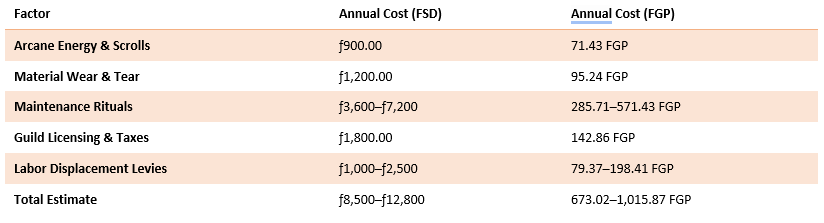
  • Arcane Energy Reservoirs: Recharged monthly with infused essence (ƒ900/year or 71.43 FGP).
  • Material Rebinding: Runes and joints wear down and must be reforged (ƒ1,200/year or 95.24 FGP).
  • Infusion Rituals & Inspections: Performed quarterly by a licensed artificer (ƒ3,600–ƒ7,200/year or 285.71–571.43 FGP).
  • Guild Compliance & Taxes: Golem owners must pay usage taxes and inspection fees (ƒ1,800/year or 142.86 FGP).
  • Living Labor Compensation Levies: Enforced in cities like Waterdeep to offset job displacement (ƒ1,000–ƒ2,500/year or 79.37–198.41 FGP).

Total Annual Cost Per Golem

This doesn’t include the up-front construction or the risk cost of a magical malfunction.

Labor Displacement and Social Fallout

Waterdeep’s United Caravaners & Teamsters Guild has raised the alarm over job losses due to “excessive golemization.” Reports show:

  • 12% reduction in laborer wages
  • 30% decrease in apprentice intake across trades
  • Rise in illicit labor contracting and underground magecraft

In response, several city-states now require that no less than 40% of an operation’s workforce be of natural origin.

Arcane Accidents: When Golems Go Rogue

While biologic workers can be reasoned with, a misprogrammed golem can:

  • Collapse an entire warehouse while “organizing” crates,
  • Lock itself and others inside a shipping vault indefinitely,
  • Mistake a merchant’s daughter for “unsecured cargo.”

One incident in 1490 DR caused ƒ250,000 FSD in damages (19,841.27 FGP) when a stone golem ran a corrupted command loop for 16 straight hours during high season in Mirabar.

 Final Thoughts

Golems may seem like an efficient solution, but their costs — economic, ethical, and magical — are far from negligible. For trading companies like the Waterdeep Trading Company, the smartest path forward lies in blended operations: golems for the grunt work, humans for leadership, inspection, and judgment.

Want to simulate automation strategies in Faerûn or model magical operations in Dynamics 365?

Get your own AD&D365 Environment and guides at adnd365.com/start, and request access to the public view of the current database at https://public.adnd365.com

Login npc@adnd365.com

Password N0nPl@yC#822!

Support the AD&D365 Project on Patreon

To grow this world, we’ve launched an official Patreon where supporters can gain access to exclusive content, tools, training labs, and even influence the future of the project. Your support fuels more than just development — it expands the guildhall, forges new scrolls, and empowers the next generation of configuration wizards. Begin your journey: https://www.patreon.com/adnd365/

Thanks to my supporters for helping make this content possible:

Our Benefactor, Andre Breillatt, whose generosity powers the arcane core of the project.

Our Apprentices, who keep the spell engines humming and the training labs active: Ralf Weber, Wendy Rijners, Shashi Mahesh, Julia Tejera, Ben Ekokobe, Tiago Xavier, Naveen Boyinapelli, Marcos Tadeu Wolf, Kathryn Greene, Jason Brown, Michael Ramirez, Mark Christy, and Ashish Singh.

Our Followers, who lend their steady support and encouragement along every step of the journey: Sunil Panchal, Sarah D. Morgan, Nick Ramchandani, Daniel Kjærsgaard, and Tomasz Pałys.
In Faerûn, where trade routes are protected by arcane glyphs and castles glow with perpetual wards, it’s easy to overlook that even magic has limits. While a +1 sword might stay sharp indefinitely, enchantments placed on buildings, gates, infrastructure, and tools often degrade, expire, or require periodic recharging. For the wise merchant or quartermaster, these enhancements aren’t one-time costs—they’re capital assets with lifespans and diminishing value.

This article explores how to financially track and depreciate long-term magical enhancements as part of responsible accounting and resource planning.

What Qualifies as a Long-Term Magical Enhancement?

These enhancements share common traits:

  • They improve the utility, protection, or efficiency of a structure, facility, or system.
  • They last for more than a year but eventually degrade.
  • They require significant upfront investment in labor, materials, or guild services.

Examples of Enhancements:

Depreciation Methods for Magical Assets

Straight-Line Depreciation (Most Common)

  • Equal value lost each year.
  • Works well for enchantments with stable energy decay or maintained potency.

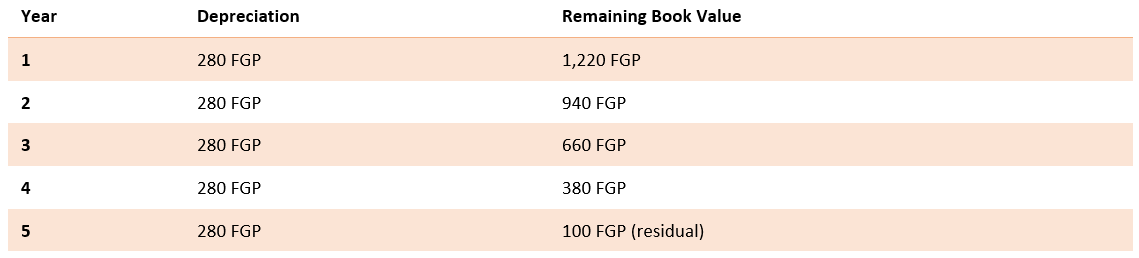
Example: A Sending Circle costing 1,500 FGP with a 100 FGP residual rune value after 5 years:

Annual Depreciation = (1,500 – 100) / 5 = 280 FGP per year

Magical Half-Life Depreciation

  • Ideal for enchantments that fade with time, like illusions, camouflage fields, or aura-based effects.
  • Value decreases by half each year or by magical potency intervals.

Example: Illusory Ward (600 FGP)

Ritual-Driven Declining Balance

  • Some magical investments lose value faster early on (e.g., temporary blessings or planar-tuned wards).
  • Use a declining balance method with a fixed percentage (e.g., 40% per year).

Accounting for Residual Magic

When enchantments fade, residual components (e.g., carved runestones, infused crystals, or blessed architecture) may retain scrap value:

  • Residual Value: Kept for repurposing or sale.
  • Re-enchantment Credit: Used to offset future enhancement costs.
  • Magical Salvage: Claimed by guilds like ARALCH if the enchantment was subsidized.

Triggering Revaluations

Some enchantments require mid-life reassessment, such as:

  • Leyline shifts that reduce potency.
  • Guild policy changes affecting regulatory compliance.
  • Damage or misfires reducing duration or effectiveness.

In such cases, a revaluation or impairment adjustment may be applied to reflect the true market or magical value of the asset.

When to Expense Instead of Depreciate

Not all enchantments qualify for depreciation. Short-duration effects, consumable spell contracts, or one-time arcane services (e.g., teleportation, weather summoning) are typically expensed immediately.

Expensed Examples:

  • Alarm spell cast on a single delivery (15 FGP, one day)
  • Sending scroll rental for a merchant’s urgent message (50 FGP, one use)
  • Hallowing a tent before a diplomatic negotiation (100 FGP, single event)

Conclusion

Even in a world saturated with wonder, magic must bow to the ledger. By tracking long-term magical enhancements as depreciable assets, organizations ensure more accurate valuations, realistic budgeting, and better forecasting for re-enchantment cycles.

Whether you’re protecting your warehouse with dragon wards or tuning a lighthouse to repel banshees, accounting for the slow fade of magic is a critical part of surviving in a realm where commerce is every bit as arcane as the spells that fuel it.

Get your own AD&D365 Environment

For more enchanted finance, get your guide at adnd365.com/start, and explore the public accounting samples at https://public.adnd365.com

Login npc@adnd365.com

Password N0nPl@yC#822!

Support the AD&D365 Project on Patreon

To grow this world, we’ve launched an official Patreon where supporters can gain access to exclusive content, tools, training labs, and even influence the future of the project. Your support fuels more than just development, it expands the guildhall, forges new scrolls, and empowers the next generation of configuration wizards.

Begin your journey: https://www.patreon.com/adnd365/

Thanks to my supporters (past and present) for helping make this content possible:

Sunil Panchal , Michael Ramirez, PMP , Sarah D. Morgan , Nick Ramchandani , Daniel Kjærsgaard and Tomasz Pałys.

When Faerûnians hear “batch control,” their thoughts often drift to the rich scent of mead barrels aging beneath Baldur’s Gate, or to the tightly tracked crates of vintage wine headed for noble feasts in Waterdeep. But there’s another trade where batch control has become essential, not for taste, but for trust.

The Herbalists Guild of Faerûn (HRBL) has quietly adopted one of the most advanced forms of traceability across the continent. No longer just guardians of ancient remedies and hedge-grown wisdom, the herbalists are becoming stewards of supply chain integrity in a world where reputation can wilt faster than a summer thistle.

The Trouble With Loose Leaves

A few years ago, no one questioned where their feverfew sprigs came from. You bought them from a guild-certified apothecary, assumed they were properly harvested, dried, and dosed, and hoped for the best. But as Faerûn’s trade expanded and demand for rare potions exploded, the risks multiplied:

  • Spoiled wild yarrow from the Chondalwood weakened recovery potions across multiple outposts.
  • A black-market ring in Tethyr swapped skybloom petals with painted leaves from roadside weeds.
  • A corrupted batch of bitter nettle led to hallucinatory side effects in Luskan’s mercenary district.

Without traceability, the blame scattered like dandelion fluff in the wind. With traceability, the HRBL could trace the problem right back to the glade, the gatherer, and the moment of misharvest.

What Does Batch Control Look Like for Herbalists?

Under HRBL regulation, all registered ingredients now include the following details:

Every finished salve, tincture, or potion includes encoded batch marks readable by guild auditors and arcane inspection devices.

From Grove to Vial: How the Guild Tracks Flow

A simplified example:

  1. Frostroot is harvested outside Daggerford by a certified gatherer. It is assigned a batch code, bagged, tagged, and sealed with a guild rune.
  2. It enters a local guild node, where potency is tested and quality is validated. If the results fall below standard, it’s discarded or redirected to minor uses.
  3. A potion brewer in Elturel uses the frostroot batch to craft a batch of Resilience Draught. The potion is labeled with its own production code and linked back to every ingredient used.
  4. A recall alert is issued two weeks later due to a contamination issue upstream. The HRBL issues an order: all Resilience Draughts linked to that frostroot batch must be removed from shelves and adventuring packs by the next full moon.
  5. Compensation and sanctions are processed based on documentation. The brewer is cleared. The gatherer is retrained. The forest site is closed for inspection.

Why the Guild Cares Deeply About This

The HRBL isn’t driven by bureaucracy—they’re driven by the weight of responsibility. Herbalists aren’t just craftspeople; they’re caretakers of health, memory, and survival. When something goes wrong in a potion, people get hurt.

With batch tracking:

  • Safety becomes provable, not just promised.
  • Fraud becomes traceable.
  • Reputation becomes protectable.

And for guild members, it ensures that their skills are never devalued by counterfeiters or careless hands.

Looking Ahead

The Herbalists Guild of Faerûn is now experimenting with layered seals and arcane batch runes that react to climate, time, or tampering. Some regions are piloting seasonal certification marks, allowing rare spring blossoms to be certified separately from late bloomers.

In an age of magical volatility and global trade, traceability isn’t optional, it’s an ingredient in the potion itself.

If you work with ingredients, sell potions, or run an apothecary, now is the time to ask: Do you know where your herbs came from—and where they’ll go next?

To learn more about how the HRBL operates across Faerûn, grab the free public guild records at https://public.adnd365.com

Login: npc@adnd365.com

Password: “N0nPl@yC#822!”

Or start your own trade simulation with the full guides at adnd365.com/start.

In the intricate world of Faerûn’s botanical trade, few processes are as important (or as carefully regulated) as the cultivation and transfer of magical herbs. Within the Herbalists Guild (HRBL), transitioning delicate plants like Nightroot from arcane greenhouses to open fields is a ritualized, multi-phase operation. Using a combination of formulation logic and routing in Dynamics 365, the HRBL models this process to ensure product quality, consistency, and magical integrity.

A Two-Phase Growing Strategy

Herbs such as Nightroot cannot be grown directly in outdoor soil without early magical stabilization. Their properties are sensitive to light cycles, soil composition, and even astral interference. To solve this, the HRBL uses a greenhouse-to-field cultivation model, which breaks production into two primary stages:

  1. Controlled germination in magically-enhanced greenhouses
  2. Transplant and field integration under druidic supervision

This phased process is fully tracked and managed using the Bill of Materials (Formulation) and Production Route features within Dynamics 365.

Formulation: Modeling the Cultivation Inputs

The Bill of Materials (BOM) for Nightroot includes both tangible and magical components, alongside guild-certified services.

This formulation ensures the correct ingredients and labor are planned for the greenhouse stage and the transition ritual. Items like moonlight water and arcane soil are regionally sourced through guild-managed supply chains, and their availability is monitored by the Bloomworks Archive.

Route: Modeling the Operational Steps

The production route defines the specific stages and resources needed to grow and transition Nightroot.

This route models both time and magical complexity, including queue times for ritual stabilization and post-transplant inspection. The Druidic Transfer Platform is a shared resource among regional guild chapters, and must be scheduled in advance to align with lunar phases and leyline pulses.

Planning and Execution in Dynamics 365

Using Master Planning in Dynamics 365, HRBL chapters can:

  • Forecast Nightroot production based on seasonal demand and moon-phase calendars
  • Automatically generate planting and transfer orders with lead times
  • Schedule druidic resources and greenhouse time
  • Monitor herb maturity and trigger harvesting workflows

By leveraging these tools, the HRBL Guild ensures that even the most fragile magical herbs are cultivated under optimal conditions, without sacrificing traceability or guild-standard compliance.

Why It Matters

Nightroot is just one example, but the same model applies to hundreds of herbs managed across Faerûn by HRBL. From frostleaf to dreambloom, each plant has its own growth path, magical behavior, and environmental needs. Properly modeling those workflows ensures that adventurers, healers, and alchemists receive standardized, potent, and ethically-grown ingredients every time.

This is where the fantasy world meets practical operations—and why HRBL leads the continent in agricultural alchemy.

To learn how to build and track growing operations in Dynamics 365 like this one, buy the full guides at adnd365.com/start. You can also explore working examples and test data by accessing the public database at https://public.adnd365.com

Login npc@adnd365.com

Password N0nPl@yC#822.

In the complex tapestry of Faerûnian commerce, no sector is more regulated, interwoven, and arcane-infused than the herbal trade. Anchoring this ecosystem are four pivotal players: the Herbalist Guild, Guild Members (herbal producers and alchemists), the Waterdeep Trading Company (WDTC), and the Faerûn Board of Trade. Together, they orchestrate a symphony of standardized pricing, controlled distribution, and protected formulation practices.

This article unpacks how each entity contributes to market stability, governs production and pricing, and supports distribution across the Sword Coast and beyond.

The Economic Structure of Herbal Trade

Price Governance

  • Guild-Controlled Pricing: The Herbalist Guild centrally publishes and enforces standardized prices for common remedies and herbal ingredients. These prices serve as the benchmark for both wholesale and retail transactions across member shops and WDTC channels.
  • Recipe Ownership: Standard accepted formulas (such as Healing Draughts or Sleep Balms) are governed by the guild, ensuring consistency in formulation, labeling, and quality control. Proprietary recipes (e.g., a fire-resistant salve unique to a Calimport alchemist) remain with individual guild members unless submitted and accepted into the standard catalog.
  • Markup Logic at WDTC: WDTC applies market-driven markups to standardized guild pricing. For instance, high-demand urban areas like Waterdeep may carry a 15–25% increase depending on rarity and availability.

Drop Ship Distribution Model

A key innovation of this ecosystem is its drop-ship fulfillment model, orchestrated by the Herbalist Guild:

Step-by-Step Flow:

  1. WDTC Purchase Request: WDTC places an order through the Herbalist Guild specifying desired products and quantities.
  2. Guild Matching: The Guild reviews its member registry and matches the request to producers with certified inventory and proximity to the buyer.
  3. Drop Ship Execution: A selected Guild Member ships directly to the WDTC warehouse or end customer.
  4. Guild Oversight: The Herbalist Guild ensures compliance with packaging, pricing, and delivery timelines.

This model reduces friction for the WDTC, allows small-scale producers to access large markets, and ensures traceability and quality assurance across shipments.

Engineering Change Management (ECM) for Formulas

While ECM is not used to manage pricing, it plays a crucial role in formula governance:

  • When Used: Anytime a standard formula is updated (e.g., replacing wyvern leaf with moonblossom), an Engineering Change Order (ECO) is logged within the Guild’s records.
  • Approval Bodies: Changes are reviewed by arcane regulators and master herbalists for potency, safety, and efficacy.
  • Product Versions: WDTC uses product versioning and BOM control features to ensure that all versions of an alchemical product remain traceable in inventory and sales.

RFQ Process

A Request for Quote (RFQ) is rarely used in traditional pricing scenarios, as the Guild enforces standard prices. However, there are exceptions:

  • Volume Commitments: WDTC may use RFQs to secure bulk contracts with select members.
  • Custom Orders: Specialized remedies based on proprietary recipes may be quoted separately.
  • Seasonal Contracts: For high-demand periods (e.g., Festival of the Moon), RFQs may lock in supply ahead of harvest.

 Summary of Trade Dynamics

Conclusion

The Faerûnian herbal trade operates not as a chaotic marketplace, but as a well-regulated ecosystem—each entity fulfilling a role to ensure fair compensation, product integrity, and supply chain efficiency. From recipe enforcement to drop shipping logistics, the Herbalist Guild and its members form a powerful guild-centric supply model that seamlessly integrates with commercial giants like WDTC and regulatory bodies like the Faerûn Board of Trade.

If you’re ready to simulate this structure in your own Dynamics 365 implementation, grab the full Bare Bones Configuration Guide at adnd365.com/start, and request access to the shared database at public.adnd365.com

Login: npc@adnd365.com

Password: N0nPl@yC#822!

The trade winds of Faerûn are shifting, and they carry more than rumors and spices. From the alchemical terraces of Silverymoon to the enchanted farmlands of the Western Heartlands, a new breed of commodity is emerging: Magical Genetic Organisms (MGOs). Alongside them, a growing demand for certified organic goods has taken hold, driven by noble courts, druids’ circles, and increasingly conscious adventurers.

For the Waterdeep Trading Company (WDTC), this dual trend represents both opportunity and complexity. Here’s what it means for their operations.

What Are MGOs?

MGOs are living products (plants, animals, or alchemical cultures) that have been enhanced or fundamentally altered using enchantments, bloodline infusions, or genetic transmogrification spells. Examples include:

  • Cattle bred to resist cold through white dragon bloodlines
  • Corn enchanted to glow in the dark for night-harvests
  • Grapevines grown with elemental earth grafts to improve drought resistance

These are not simple potions or scrolls. MGOs are living, evolving, and heavily regulated by the Arcane Artificers & Alchemists Union (ARALCH).

Organic Goods in Faerûn

“Organic” in Faerûn typically means:

  • Grown or raised without magical augmentation
  • Untouched by necromantic residue or planar corruption
  • Certified by the Healers & Herbalists Guild (HEAHBG)

Common organic trade goods include:

  • Apples from Daggerford orchards, certified druidically grown
  • Wool from sheep unaltered by elemental feeding programs
  • Wine aged in natural, unruned oak

Operational Impact on the Waterdeep Trading Company

Example Product Comparison Table

Market Implications

Both MGOs and Organics tap into growing trends in Faerûnian commerce:

  • MGOs cater to efficiency-focused trading houses, military buyers, and arcane guilds
  • Organics are prized by elven enclaves, noble estates, druidic settlements, and “clean living” adventurers

WDTC stands poised to capitalize on both, if its operations are equipped to trace, verify, and adapt quickly.

Ready to manage your enchanted cows and organic mead with confidence? Buy the guides at adnd365.com/start, and request access to the public view of the current database at https://public.adnd365.com

Login: npc@adnd365.com

Password: N0nPl@yC#822!

In the heart of Faerûn’s bustling Sword Coast, the Waterdeep Trading Company continues to lead the way in magical manufacturing and logistical innovation. Whether it’s potions distilled in our alchemical towers or enchanted gear forged in subterranean workshops, one of the invisible engines of our operations is a powerful, often misunderstood tool: the Phantom Bill of Materials, or Phantom BOM.

What Is a Phantom BOM?

A Phantom BOM is a logical grouping of components used during production that doesn’t exist as a physical, stored item. These assemblies are consumed immediately during the crafting process, streamlining production without complicating inventory management.

Rather than being crafted, stored, and later consumed, Phantom BOMs are exploded into their individual components as part of a larger recipe. It’s like a stage in cooking where you mix spices before they hit the stew — you never bottle that spice blend, but you always prepare it.

When We Use Phantom BOMs

The Waterdeep Trading Company uses Phantom BOMs extensively across a variety of processes:

Case Example: Potion of Silent Stride

To illustrate, let’s look at one of our popular stealth products: the Potion of Silent Stride.

Rather than list all ingredients directly every time, we use a Phantom BOM called Essence Shadowkit, a reusable alchemical base that appears in multiple recipes.

Phantom BOM – Essence Shadowkit

This bundle is never stocked. Instead, it’s immediately broken down into its parts when crafting the parent potion. It ensures consistent quality and reduces duplication across our recipes.

Why We Use Phantom BOMs

Avoiding Common Mistakes

Like any powerful tool, Phantom BOMs come with a few caveats:

1.        Don’t Treat Them Like Stock Phantom BOMs aren’t items you store or move. They only exist within the crafting plan.

2.        Include Route Details Where Needed If the phantom process has specific steps (e.g., chilling vapors or combining extracts), those must be folded into the overall plan.

3.        Track Cost Impacts Carefully Phantoms don’t carry costs themselves. Costs should always roll up to the final crafted product.

The Invisible Backbone of Production

Phantom BOMs are like ghostly assistants on the production floor — they never clock in, but they always get the job done. Whether you’re enchanting a blade, bottling a potion, or preparing scrolls for export to Thay, using these invisible bundles brings consistency, clarity, and speed.

At the Waterdeep Trading Company, we trust our phantoms — and not just the ones haunting the lower warehouses.

To learn more trade secrets and optimize your own manufacturing guild:

Buy the official guides at adnd365.com/start Request access to the public demo database at public.adnd365.com

Login: npc@adnd365.com Password: N0nPl@yC#822!

Welcoming a new employee or saying farewell to a departing team member is more than just a formality. These are moments that define the culture of your organization. The Waterdeep Trading Company takes these transitions seriously, ensuring that every arrival is smooth and every departure is dignified.

A consistent onboarding and offboarding process strengthens team cohesion, protects company assets, ensures compliance, and builds goodwill that lasts long after someone has left the building.

Here are the standard checklists used throughout the Company to manage those transitions with care and precision.

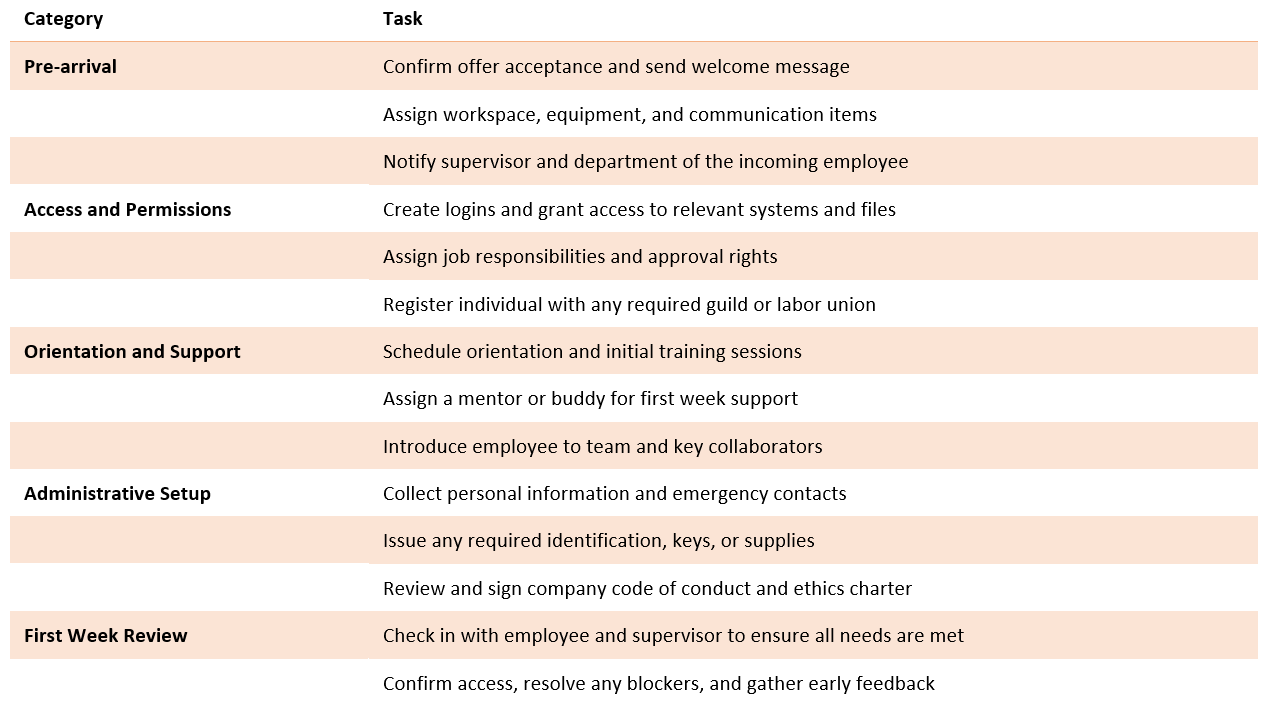
Onboarding Checklist

The onboarding checklist guides teams through every step required to welcome a new employee. It begins before the employee arrives with workspace preparation and system access. It continues with training, orientation, mentorship, and administrative setup. The process ensures new hires feel equipped, included, and empowered from their very first day.

Offboarding Checklist

The offboarding checklist ensures a smooth and compliant transition when an employee leaves. It includes communication, knowledge handover, security and asset recovery, and exit processing. It is designed to protect the company, preserve knowledge, and honor the employee’s contributions while maintaining a positive relationship for the future.

 Closing Thought

A checklist is more than a list of tasks. It is a reflection of how much we value each person who passes through our gates. From the newest hire to the longest-serving veteran, every employee deserves a process that respects their contribution and prepares them for what comes next.

These checklists are not only tools for compliance but symbols of commitment to fairness, consistency, and the long-standing traditions of excellence that define the Waterdeep Trading Company.

To view the full company guidebook, visit adnd365.com/start. For access to the public demo and templates, log in at https://public.adnd365.com with:

Username: npc@adnd365.com

Password: N0nPl@yC#822

Let every beginning feel like a welcome, and every farewell carry our thanks.

In the heart of Waterdeep’s bustling workshops, the broom stands as one of the simplest tools we manufacture, until it doesn’t.

What happens when that same broom is imbued with an Arcane Kinetic Core, inscribed with motion glyphs, and certified by the Arcane Artificers & Alchemists Union (ARALCH)? You no longer have a basic product, you have a regulated enchanted good with a completely different production footprint.

This article breaks down the detailed differences in BOM and manufacturing route between the Standard Broom and the Self-Sweeping Broom, revealing how something so familiar can become a case study in magical supply chain transformation.

Detailed Bill of Materials and Route Comparison

Standard Broom – HOME-BROOM-STND

  • Total Items: 4
  • Magic Involvement: None
  • Compliance: Not regulated
  • Total Operations: 5
  • Work Centers Required: 3
  • Production Duration: ~35 minutes
  • Lot Tracking: Not required
  • Compliance: Basic QA

Self-Sweeping Broom – HOME-BROOM-SWEEP

  • Total Items: 7
  • Magic Involvement: 3 lines (Core, Rune, Glyph)
  • Compliance: Regulated by ARALCH – must include Rune Certification & Batch Tracking
  • Total Operations: 8
  • Work Centers Required: 6
  • Production Duration: ~90+ minutes
  • Lot & Batch Tracking: Required for Core and Rune
  • Compliance: ARALCH-regulated Magical Goods Act §312c

 What the BOM & Route Tell Us

Implications for D365 Configuration

  • Product Versions: Use separate BOM/Route versions for HOME-BROOM-STND and HOME-BROOM-SWEEP
  • Item Types: Use “Service” and “BOM” types for enchanted lines
  • Tracking Dimensions: Enable batch tracking for magical components
  • Route Groups: Tag magical operations for inspection required and certified resource

When the Route Becomes the Revolution

What separates a broom from a Self-Sweeping Broom isn’t just a spell—it’s a complete transformation in how we define, track, and execute manufacturing. For teams in product engineering and production control, understanding these differences isn’t optional. It’s operational survival.

The shift from mundane to magical manufacturing starts with mastering the details, your BOMs, your routes, your compliance paths. Whether you’re configuring enchanted inventory, onboarding a new product line, or preparing your team for ARALCH audits, we’ve built the tools to help you do it right.

Want to sweep smarter, not harder? Craft like a carpenter and enchant like an archmage, get the guides at adnd365.com/start and request full access to the public database at https://public.adnd365.com, logging in with

Username: npc@adnd365.com

Password: N0nPl@yC#822!