Archive

Tag Archives: art

In the heart of Faerûn’s bustling Sword Coast, the Waterdeep Trading Company continues to lead the way in magical manufacturing and logistical innovation. Whether it’s potions distilled in our alchemical towers or enchanted gear forged in subterranean workshops, one of the invisible engines of our operations is a powerful, often misunderstood tool: the Phantom Bill of Materials, or Phantom BOM.

What Is a Phantom BOM?

A Phantom BOM is a logical grouping of components used during production that doesn’t exist as a physical, stored item. These assemblies are consumed immediately during the crafting process, streamlining production without complicating inventory management.

Rather than being crafted, stored, and later consumed, Phantom BOMs are exploded into their individual components as part of a larger recipe. It’s like a stage in cooking where you mix spices before they hit the stew — you never bottle that spice blend, but you always prepare it.

When We Use Phantom BOMs

The Waterdeep Trading Company uses Phantom BOMs extensively across a variety of processes:

Case Example: Potion of Silent Stride

To illustrate, let’s look at one of our popular stealth products: the Potion of Silent Stride.

Rather than list all ingredients directly every time, we use a Phantom BOM called Essence Shadowkit, a reusable alchemical base that appears in multiple recipes.

Phantom BOM – Essence Shadowkit

This bundle is never stocked. Instead, it’s immediately broken down into its parts when crafting the parent potion. It ensures consistent quality and reduces duplication across our recipes.

Why We Use Phantom BOMs

Avoiding Common Mistakes

Like any powerful tool, Phantom BOMs come with a few caveats:

1.        Don’t Treat Them Like Stock Phantom BOMs aren’t items you store or move. They only exist within the crafting plan.

2.        Include Route Details Where Needed If the phantom process has specific steps (e.g., chilling vapors or combining extracts), those must be folded into the overall plan.

3.        Track Cost Impacts Carefully Phantoms don’t carry costs themselves. Costs should always roll up to the final crafted product.

The Invisible Backbone of Production

Phantom BOMs are like ghostly assistants on the production floor — they never clock in, but they always get the job done. Whether you’re enchanting a blade, bottling a potion, or preparing scrolls for export to Thay, using these invisible bundles brings consistency, clarity, and speed.

At the Waterdeep Trading Company, we trust our phantoms — and not just the ones haunting the lower warehouses.

To learn more trade secrets and optimize your own manufacturing guild:

Buy the official guides at adnd365.com/start Request access to the public demo database at public.adnd365.com

Login: npc@adnd365.com Password: N0nPl@yC#822!

The Waterdeep Trading Company employs a wide range of talent—from guild-trained accountants in Baldur’s Gate to teleportation-circle custodians in Elturel. With such a diverse and magically-inclined workforce, offering the right benefits isn’t just important—it’s essential for survival, morale, and long-term productivity (especially in a realm where “occupational hazard” may include basilisk encounters).

But how do we track benefits, manage eligibility periods, and enable self-enrollment in a setting where both arcane scrolls and labor contracts exist side-by-side?

The answer lies in our adoption of Advanced Dungeons & Dynamics 365.

What Counts as a Benefit in Faerûn?

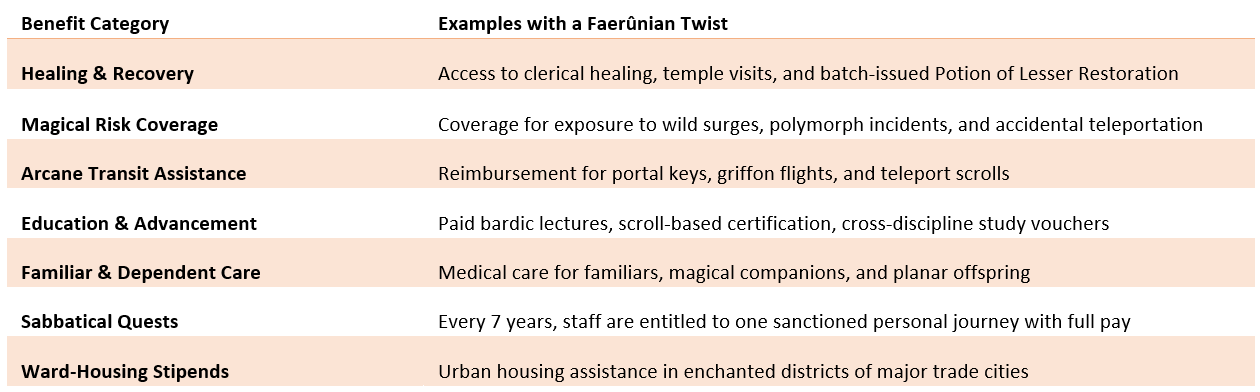
Employee benefits in Faerûn go well beyond the mundane. Here’s a breakdown of what we manage at WDTC:

Let the Adventurers Choose: Self-Service Enrollment

In the spirit of decentralization (and to avoid overworking our HR scribes), employee self-enrollment is a cornerstone of our benefit tracking system. Whether you’re a dwarven accountant working nights in Mithral Hall or a half-elf procurement officer stationed in Thay, you can manage your own benefits via the Employee Self-Service Portal in Dynamics 365 Human Resources.

Here’s how it works:

  1. Eligibility Flags: When a new employee is added, their race, class, guild affiliation, and role type automatically configure their base eligibility.
  2. Enrollment Periods: Two major periods are open annually — Greengrass (early spring) and Highharvestide (autumn harvest). A third “emergency re-enrollment” is available during Time of Troubles declarations.
  3. Benefit Elections: Employees can opt into available plans through an intuitive, portal-based interface. Each option includes a description, value in GP, duration, and special magical considerations.
  4. Familiar Enrollment: Employees with bonded companions can select add-on options for Familiar Healthcare, Companion Shadow Training, or Planar Travel Liability Coverage.

“I signed up for the Arcane Accidents Protection plan just in time—our wizard sneezed during inventory and turned me into a stool. That’s at least a Tier 2 incident,” — Nharra Feldspar, Junior Enchanter, Skullport Branch

Controlling Enrollment with Periods and Rules

Just like any good system of laws in Waterdeep, benefits come with timelines and compliance windows. Dynamics 365 allows us to define benefit periods, event-based eligibility, and waiting periods for risk-heavy roles.

Standard Enrollment Periods

Eligibility Conditions

  • Waiting Periods: Employees classified as “Adventurer Class II or higher” must wait 30 days before Magical Risk plans are active.
  • Guild Membership Dependencies: Benefits for potion-makers, for instance, require active status in the Healers & Herbalists Guild.
  • Location-Based Restrictions: Some plans (like “Underdark Relocation Stipends”) are only available to employees based in subterranean postings.

Automation with a Magical Touch

Here’s what makes the WDTC system so efficient:

  • Automated Alerts for enrollment deadlines sent via Sending Stones or enchanted scrollmail
  • Approval Workflows using customizable rules (e.g., benefits for a druid require Druid Circle co-signature)
  • Reporting and Audit Trails to track who enrolled, when, and how the benefits align with compensation benchmarks
  • Benefit Forecasting with Power BI to estimate potions consumed per department, scroll usage by guild, and familiars vaccinated

Final Thoughts

Managing benefits across Faerûn isn’t just about compliance—it’s about culture. By empowering our employees to enroll themselves, timing those decisions with meaningful in-world events, and tracking magical and mundane needs alike, the Waterdeep Trading Company sets a new standard in workforce support.

Whether you run a guild, a keep, or a kraken-hunting charter, there’s a lesson here: Magic might make anything possible—but good HR practices make it sustainable.

 Want to build your own portal for Faerûnian benefits management? Download the full implementation guides at adnd365.com/start and explore our working demo at https://public.adnd365.com

Login: npc@adnd365.com

Password: N0nPl@yC#822!

Your next sabbatical quest awaits—track it properly.

Let’s face it: even a +2 Flaming Sword needs a little upkeep. Whether you’re tracking enchanted siege engines, teleportation pads, or just a warehouse full of delivery carts, Asset Management in Dynamics 365 keeps the gears turning—and the dragons from eating your depreciation schedules.

In the world of Advanced Dungeons & Dynamics 365, Asset Maintenance isn’t just about compliance. It’s about making sure your investments—magical or mundane—stay in top condition, are properly accounted for, and deliver value across their lifecycle.

Let’s grab our wrenches (and maybe a wand or two) and dive in.

What Counts as an “Asset” in Faerûn?

At the Waterdeep Trading Company, assets aren’t just furniture and forklifts. They include:

  • Arcane-powered warehouse lifts
  • Elven-crafted brewing kettles
  • Spell-imbued cartography tables
  • Portable towers (foldable, but pricey)
  • Good old-fashioned stone buildings

Each of these is capitalized in D365 as a fixed asset, linked to a financial ledger, and optionally connected to preventive maintenance schedules.

Setting Up Asset Maintenance in Dynamics 365

Here’s how you’d set up asset maintenance in your realm (or organization):

1. Create and Register the Asset

  • Name: Teleportation Circle – Warehouse 3
  • Asset Group: Magical Infrastructure
  • Acquisition value: 10,000 GP
  • Location: Waterdeep Distribution Center

2. Define Maintenance Plans

You can create preventive maintenance schedules using work orders that trigger based on time, usage, or condition.

Example:

  • Monthly Arcane Calibration every 30 days
  • Usage-based Inspection every 1,000 teleportations
  • Emergency Repair workflow for portal misfires

Each plan can include checklists, resources (labor or magical essence), spare parts, and cost estimates.

3. Assign Work Orders to a Technician (or Wizard)

In AD&D365, work orders are routed to your maintenance team—whether that’s a dwarven engineer or a gnome with a wrench and a scroll of Identify.

Work orders track:

  • Job instructions
  • Duration and cost
  • Downtime tracking
  • Replacement parts used

You can view upcoming maintenance on the Asset Calendar, which is color-coded for urgency (and potential explosions).

Financial Tracking of Assets

In the Fixed Assets module, you can:

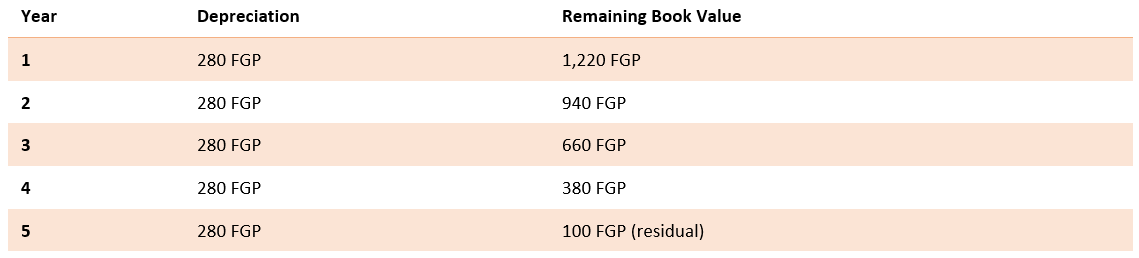
  • Track depreciation (straight-line, declining balance, or “it disappeared into a portal”)
  • Allocate costs to different departments or guilds
  • Post maintenance costs to the General Ledger
  • Track insurance, warranties, and lifecycle status

Need to retire or sell an asset? Just initiate the disposal process—no resurrection spells required.

Reporting & Monitoring

Key reports available in Dynamics 365:

  • Asset Utilization Rate
  • Mean Time Between Failures (MTBF)
  • Maintenance Cost Trends
  • Asset Condition Score

Pro tip: Pair this with Power BI to visualize asset hotspots—areas where breakdowns occur more often than cursed doorways in the Undermountain.

Final Thoughts

Asset Maintenance in Dynamics 365 isn’t just about keeping the lights on—it’s about making strategic decisions with full visibility. Whether you’re managing a tavern’s delivery fleet or a guild hall’s magical forge, keeping your assets in top shape pays off in gold, uptime, and peace of mind.

Want to Master Your Magic (and Machines)?

Everything in this post (and so much more) is covered in the Advanced Dungeons & Dynamics 365 book series. It’s the perfect blend of ERP knowledge and fantasy storytelling—with practical examples drawn straight from the realms of Faerûn.

Grab your copy now and charm your way into trade success: Buy the AD&D365 Books