In Faerûn, some of the most valuable work done by the Waterdeep Trading Company is not tied to stocked goods or caravan shipments. Instead, it comes from clients who need unique work planned, tracked, and completed on their behalf. These are customer-funded projects, a standard part of trade across the Sword Coast, where noble houses, guilds, and adventuring parties require crafted items, research, or services beyond a regular order.
For the Waterdeep Trading Company, these projects allow the guild to grow coin reserves without taking on risk from unsold stock. Each project is financed by the customer who requests it, and Dynamics 365 helps track cost, time, revenue, and progress through structured project accounting, ledger controls, and milestone billing.
This article explores how customer-funded projects function in Faerûn, why they matter, and how they are managed through the company’s accounting practices.
What Customer Funded Projects Are
A customer-funded project is work that is paid for by the customer either in advance or throughout the life of the activity. The Waterdeep Trading Company treats these as formal undertakings, usually tied to a contract scroll signed and sealed by the Scriveners Guild. Common examples include commissions for enchanted goods, production runs for noble households, research tasks for arcanists, or repairs for merchant fleets.
Unlike internal projects, these efforts do not draw on the company’s own coin at the outset. Instead, funds provided by the customer become the resource pool used to carry out the work. This requires precise accounting to separate the client’s coin from internal budgets.
Why These Projects Matter
Customer-funded projects support the company’s financial stability in several ways.
They remove inventory risk, since the client covers all costs.
They allow the company to expand its capabilities, since rare materials or specialist labor can be procured with client funds.
They offer steady and predictable revenue, since contracts lay out how milestones and progress payments are invoiced.
In a land where supply lines stretch across wild terrain and arcane markets shift day by day, having stable client-backed work ensures dependable profit for Greta Ironfist and her planners.
Core Components of a Customer Funded Project
Below are the significant elements the Waterdeep Trading Company tracks within Dynamics 365.
First, Contract Setup. Every project begins with a customer record linked to a project contract. The contract defines funding rules, billing type, currency, and expected milestones. The base setup for customers and billing models follows the same ledger framework taught in the Bare Bones Configuration Guides.
Second, Funding Allocation. Funds supplied by the customer are mapped to the project so that labor, materials, and overhead settle against the customer’s balance rather than internal accounts.
Third, Work Breakdown. Tasks, phases, and activities are created to organize the work effort. This may include forging stages, enchantment sessions, transport planning, or research steps.
Fourth, Cost Accumulation. All project expenses are routed through dedicated ledger accounts. This includes raw material purchases, hourly craft labor, magical services, and overhead charges.
Fifth, Revenue Recognition. Invoicing may be based on milestones, time-and-materials, or fixed-price agreements. Milestone billing is most common, with seals applied at major completion points.
Sixth, Project Closure. The ledger is settled, any unused customer funds are returned or credited, and Seraphina Quillspire and Maelor the Quill archive all documentation.
Worked Example: Commissioned Arcane Beacon for the Lords of Everlund
To show how customer-funded projects operate, here is a complete example of a commission.
Scenario: The Lords of Everlund request a defensive arcane beacon built by the Waterdeep Trading Company. They provide full funding up front.
Below is a table that captures the planned cost structure.
Before the table, here is an explanation. This table lists the major cost items required to produce the arcane beacon and shows how each cost is drawn from the customer’s funded pool. It helps planners keep spending aligned with the contract.
Because the customer funds the entire amount at contract signing, the ledger holds their deposit as a liability until revenue is recognized through milestone completion.
A second table shows how revenue is released.
This table outlines the billing milestones and explains when the customer’s deposit converts to earned revenue. This helps the Accounts Receivable clerks track progress and apply the proper postings.
Once the final milestone is posted, the deposit liability is cleared and converted into project revenue, and the project is closed.
Realms-Aware Considerations
Faerûn introduces unique factors that must be considered with customer-funded projects.
Arcane inputs may require permits from mage guilds, adding additional lead times.
Regions outside the Sword Coast may impose trade tariffs or require special papers.
Some clients provide materials directly, such as gemstones or ancient relics, which must be handled as non-monetary contributions.
Guild labor unions control rates for smiths, engravers, and arcane specialists.
Projects involving planar materials may require Essence Credit tracking for sustainability purposes.
These factors make structured project accounting vital for the Waterdeep Trading Company.
Final Thoughts
Customer-funded projects allow the Waterdeep Trading Company to serve nobles, adventurers, and trade houses with custom work while keeping internal risk low. When managed well, they offer steady coin, predictable workloads, and precise financial control.
For teams using Dynamics 365, the structure provided in the Bare Bones Configuration Guides supports proper ledger setup, customer controls, and project workflows that keep each commission profitable and compliant.
Support the AD&D365 Project on Patreon. To grow this world, we’ve launched an official Patreon where supporters can gain access to exclusive content, tools, training labs, and even influence the future of the project. Your support fuels more than just development , it expands the guildhall, forges new scrolls, and empowers the next generation of configuration wizards. Begin your journey: https://www.patreon.com/adnd365/
A Grateful Salute to Our Patrons. To all those who stand behind the vision, thank you for helping bring this world to life. Our Benefactors, Andre Breillatt, and Eryndor Fiscairn‡, your boundless generosity fuels the arcane core of this project. Without your magic, the weave would falter. Our Apprentices, the spell engines turn, and the training labs thrive thanks to our current Apprentices: Michael Ramirez and Andreth Bael’Rathyn‡. Special thanks to our past Apprentices, whose contributions helped us get here: Ralf Weber, Wendy Rijners, Shashi Mahesh, Julia Tejera, Ben Ekokobe, Tiago Xavier, Naveen Boyinapelli, Marcos Tadeu Wolf, Kathryn Greene, Jason Brown, Mark Christy, and Ashish Singh.Our Initiates, Jesper Livbjerg, Peter Lorre, Gregory Brigden, and Martin Grahm, your commitment marks the start of the deeper path, stepping beyond mere observation into the active shaping of this realm. Our Followers, your steady presence along the journey is a beacon of encouragement: Eric Shuss, Sunil Panchal, Sarah D. Morgan, Nick Ramchandani, Daniel Kjærsgaard, and Tomasz Pałys. And our Voyeurs, Harry Burgh, Abdelrahman Nabil, and Basil Quarrell, ever watching from the shadows, clearly intrigued… but not enough to part with a single gold piece. Your silent curiosity is noted, and mildly judged.
Want to design your own economic models in Faerûn? Get your own AD&D365 Environment and guides at adnd365.com/start, and request access to the public view of the current database at https://public.adnd365.com – Login npc@adnd365.com, Password N0nPl@yC#822!
In Faerûn, guilds rise and fall on the strength of their name. Some have deep histories, while others seek a broader presence across the Sword Coast markets. Many do not own the workshops or caravans needed to support steady trade. This gap is filled by the Waterdeep Trading Company, which offers both white label and private-label production.
These services allow guilds, noble houses, and merchant companies to place their own seal upon goods crafted by the company. Through these partnerships, Waterdeep Trading Company becomes the quiet force behind many brands without ever setting foot in their halls.
What White Label and Private Label Mean in Faerûn
White label items are standard goods produced in bulk. Any client may purchase them and apply their own seal. The goods themselves do not change across buyers. Private label items are exclusive commissions. The client directs the product design, and the company produces it exclusively for that client.
White label favors scale. Private label favors identity.
Why These Practices Matter in the Sword Coast
Commerce moves quickly along the coast. Caravans pass through Waterdeep every day, bringing requests from far-off cities like Silverymoon and Calimport. Many organizations cannot afford to manage supply chains or maintain staff of enchanters and skilled workers. White label and private-label production turn these gaps into opportunities.
Clients gain:
Reliable supply of goods
Stable cost structure
Access to the company’s procurement network
Protection against market shifts or magical shortages
Fast entry into new regions without building local workshops
Waterdeep Trading Company gains:
Steady volume across seasons
Long-term agreements with influential houses
Exclusive contracts for rare material sourcing
Increased reach without changing its own brand
The arrangement strengthens the guild and the region.
How the Waterdeep Trading Company Manages White Label Trade
White label goods must remain consistent. They are produced with the same recipe, materials, and routing for all clients. The customer applies branding after delivery.
The Waterdeep Trading Company controls:
Material quality
Production routing
Arcane safety
Bulk transport
This keeps costs low and efficiency high.
White label items often include:
Common healing potions
Basic satchels
Travel pouches
Unmarked alchemical supplies
Simple foods and dried rations
Unenchanted scroll cases
How Private Label Production Works
Private label goods require a deeper partnership. Buyers may specify materials, freshness windows, embellishments, or even the workers permitted to handle the product. These items are tied to a single client and cannot be sold to others without permission.
Private label goods often include:
Noble house satchels with protective runes
Exclusive alchemical brews
Magical inks with secret compositions
House banners made with custom dyes
Luxury trade goods for high-end markets
Expanded Worked Example
A noble house in Silverymoon requests an enchanted satchel for its officers. The item must hold more than its size suggests. The crest must appear on the clasp in silver thread and must glow faintly when exposed to moonlight.
The Waterdeep Trading Company prepares the costing sheet shown below.
The noble house pays a private-label margin of 25%, bringing the final contract price to 255.00 FSD.
Contract Models in Faerûn
White label and private-label agreements follow distinct patterns.
Regional and Material Considerations
Faerûn is large and diverse. Production quality must adjust to regional realities.
Sword Coast: Strong supply lines and fast arcane courier routes
The North: Cold weather slows caravans so that insulation materials may be needed
Amn: Strict tax checks on imported goods
Calimshan: High interest in luxury items with rare scents or spices
Thay: Arcane compliance is strict and requires extensive proof of origin
Rare material sourcing also affects agreements. Items such as rainbow quills, moonlight dyes, and stormglass shards require planning, as they can only be harvested during specific sky turns.
Branding and Secrecy
Brand identity is vital in Faerûn. For private-label goods, Waterdeep Trading Company maintains strict confidentiality. Workrooms that produce exclusive items are closed to general staff.
Seals and crests are applied in a controlled room overseen by the Sage Archivists and the Mage Guild liaison. Arcane Treasurers record each production batch to prevent counterfeit goods.
Expanding Distribution Through Cooperative Labeling
Some guilds choose a cooperative model in which several allied houses commission white label goods but agree to share a unified brand for a season. Waterdeep Trading Company manages the production and ensures every shipment matches the shared mark.
This approach is common during:
Merchant festivals
Trade fairs
Regional harvest weeks
Diplomatic gatherings
It strengthens alliances and creates temporary product lines that build interest across provinces.
Final Thoughts
White label and private-label production turn craftsmanship into a shared advantage across Faerûn. Through these agreements, the Waterdeep Trading Company becomes a steady hand behind many banners while clients gain access to scale, skill, and arcane safety that few could maintain alone.
These partnerships strengthen trade routes, stabilize supply, and deepen the ties between guilds and houses across the realms.
Support the AD&D365 Project on Patreon. To grow this world, we’ve launched an official Patreon where supporters can gain access to exclusive content, tools, training labs, and even influence the future of the project. Your support fuels more than just development , it expands the guildhall, forges new scrolls, and empowers the next generation of configuration wizards. Begin your journey: https://www.patreon.com/adnd365/
A Grateful Salute to Our Patrons. To all those who stand behind the vision, thank you for helping bring this world to life. Our Benefactors, Andre Breillatt, and Eryndor Fiscairn‡, your boundless generosity fuels the arcane core of this project. Without your magic, the weave would falter. Our Apprentices, the spell engines turn, and the training labs thrive thanks to our current Apprentices: Michael Ramirez and Andreth Bael’Rathyn‡. Special thanks to our past Apprentices, whose contributions helped us get here: Ralf Weber, Wendy Rijners, Shashi Mahesh, Julia Tejera, Ben Ekokobe, Tiago Xavier, Naveen Boyinapelli, Marcos Tadeu Wolf, Kathryn Greene, Jason Brown, Mark Christy, and Ashish Singh.Our Initiates, Jesper Livbjerg, Peter Lorre, Gregory Brigden, and Martin Grahm, your commitment marks the start of the deeper path, stepping beyond mere observation into the active shaping of this realm. Our Followers, your steady presence along the journey is a beacon of encouragement: Eric Shuss, Sunil Panchal, Sarah D. Morgan, Nick Ramchandani, Daniel Kjærsgaard, and Tomasz Pałys. And our Voyeurs, Harry Burgh, Abdelrahman Nabil, and Basil Quarrell, ever watching from the shadows, clearly intrigued… but not enough to part with a single gold piece. Your silent curiosity is noted, and mildly judged.
Want to design your own economic models in Faerûn? Get your own AD&D365 Environment and guides at adnd365.com/start, and request access to the public view of the current database at https://public.adnd365.com – Login npc@adnd365.com, Password N0nPl@yC#822!
The Waterdeep Trading Company oversees forges, breweries, tanneries, butcher halls, and alchemical works from the Sword Coast to the Moonsea. Each site produces goods needed by guilds, caravans, and settlements. To control these flows, the company relies on two core production models: input-driven manufacturing and output-driven manufacturing.
Choosing the correct method shapes cost, supply, and worker activity across the company. It is a key skill for any planner or foreman in Faerûn.
What Is Input-Driven Manufacturing
Input-driven manufacturing begins when materials arrive. The trigger is the availability of raw goods, not a customer request. Production cycles are set by supply rhythm, which may depend on weather, caravans, or seasonal harvests.
This method suits operations that must consume materials before spoilage or where bulk goods are expected to flow in steady waves.
Examples include:
Breweries working with incoming grain.
Tanneries receiving hides after large hunts.
Butcher halls where livestock arrives from nearby farms.
What Is Output-Driven Manufacturing
Output-driven manufacturing begins when a customer asks for something. A work order is created only when demand is confirmed. Goods are produced with accuracy, often following custom instructions or strict material controls.
This method suits operations where materials are rare or high cost, or where final goods require specialized work by artificers or master smiths.
Examples include:
Enchanted gear production.
Noble house commissions.
Custom alchemical batches.
Why These Approaches Matter
Both approaches determine how goods and coins move across the company.
They influence:
Inventory levels.
Cash flow.
Labor planning.
Resource allocation.
Selecting the right method ensures smooth trade across regions such as Waterdeep, Baldur’s Gate, and Calimport.
Worked Example One: Input Driven Example: Frostroot Ale in Silverymoon
When Frostroot Barley arrives from Icewind Dale, the Copperleaf Brewery begins a new brewing cycle. Barley cannot remain in storage for long, so production is triggered by shipments.
The table below shows how incoming material drives production volume.
This method keeps taverns supplied but increases storage during heavy harvest seasons.
Worked Example Two: Output Driven Example: Enchanted Shields in Waterdeep
The Arcane Smiths Hall starts production only when a signed order arrives. Mithral Dust and Phoenix Plume are tracked tightly by the Artificers Union, which makes this method ideal.
The table shows how materials are allocated only after orders are logged.
This approach protects rare resources and ensures predictable delivery.
Worked Example Three: Input Driven Example with Variable Outputs: Whole Animal Disassembly in Daggerford
When local farmers bring cattle to the Daggerford Butcher Hall, production begins immediately. This is input-driven because the animal itself is the trigger. One animal, however, can be broken into multiple cut profiles, each requested by nearby markets.
The final output varies because cutters choose different profiles based on condition, size, and planned sales.
The table below shows how three animals can produce different cut mixes. Each cut type has a standard yield range, but the actual yield depends on the animal’s size and the chosen breakdown pattern.
How This Works in Practice
The Butcher Hall begins work as soon as animals arrive. The cutters select the breakdown style based on:
Market demand in Waterdeep or Baldur’s Gate
Condition and age of the animal
Local festival needs
Storage space and salt levels
Order patterns from nearby taverns
This produces variable outputs and makes production unpredictable. It is a classic input-driven scenario because cutters respond to the arrival of livestock rather than to a fixed customer order.
This method is standard across Faerûn, where livestock flows depend on weather, harvesting, grazing conditions, and the health of nearby herds.
Realms Aware Considerations
Faerûn’s regions shape the choice of method.
Livestock production in Daggerford follows input cycles tied to farm supply.
Wandering herds in Amn cause irregular arrivals for local butcher halls.
Enchanted workshops in Waterdeep use output cycles to protect rare essence materials.
Coastal trade houses in Calimport favor output cycles for high-value seafood that must be allocated by order.
Final Thoughts
Input-driven manufacturing converts available goods into stock as soon as materials arrive. Output-driven manufacturing produces only when the market demands it. The Waterdeep Trading Company uses both across Faerûn to keep trade stable, predictable, and profitable.
Animal disassembly adds an extra layer of complexity, since a single input can yield many different outputs. This makes the method valuable for regions with active livestock markets and diverse customer needs.
Support the AD&D365 Project on Patreon. To grow this world, we’ve launched an official Patreon where supporters can gain access to exclusive content, tools, training labs, and even influence the future of the project. Your support fuels more than just development , it expands the guildhall, forges new scrolls, and empowers the next generation of configuration wizards. Begin your journey: https://www.patreon.com/adnd365/
A Grateful Salute to Our Patrons. To all those who stand behind the vision, thank you for helping bring this world to life. Our Benefactors, Andre Breillatt, and Eryndor Fiscairn‡, your boundless generosity fuels the arcane core of this project. Without your magic, the weave would falter. Our Apprentices, the spell engines turn and the training labs thrive thanks to our current Apprentices: Michael Ramirez and Andreth Bael’Rathyn‡. Special thanks to our past Apprentices, whose contributions helped us get here: Ralf Weber, Wendy Rijners, Shashi Mahesh, Julia Tejera, Ben Ekokobe, Tiago Xavier, Naveen Boyinapelli, Marcos Tadeu Wolf, Kathryn Greene, Jason Brown, Mark Christy, and Ashish Singh.Our Initiates, Gregory Brigden, and Martin Grahm, your commitment marks the start of the deeper path, stepping beyond mere observation into the active shaping of this realm. Our Followers, your steady presence along the journey is a beacon of encouragement: Eric Shuss, Sunil Panchal, Sarah D. Morgan, Nick Ramchandani, Daniel Kjærsgaard, and Tomasz Pałys. And our Voyeurs, Harry Burgh, Abdelrahman Nabil, and Basil Quarrell, ever watching from the shadows, clearly intrigued… but not enough to part with a single gold piece. Your silent curiosity is noted, and mildly judged.
Want to design your own economic models in Faerûn? Get your own AD&D365 Environment and guides at adnd365.com/start, and request access to the public view of the current database at https://public.adnd365.com – Login npc@adnd365.com, Password N0nPl@yC#822!
The Waterdeep Trading Company has grown into one of the most respected builders of crafted goods across the Sword Coast. Many requests are small enough to be filled with stocked items, yet the most valuable work comes from large commissions. These include reinforced wagons for mercenary companies, enchanted devices for mage guilds, and custom tools for noble households. These builds require planning, steady coordination between workshop and finance, and careful tracing of every coin. Project fabrication brings structure to these builds by joining project accounting with manufacturing.
What It Is
Project fabrication treats each commission as a controlled project while using manufacturing to perform the physical crafting. This keeps the build organized and allows both the workshop master and the finance scribe to follow the same plan from start to finish.
A project holds the financial structure. A production order holds the physical process. The two flow together through shared postings.
The project stores budgets and estimated costs
Production orders consume materials and record labor
Actual postings feed directly into the project ledger
Final cost is compared to initial expectations
Customers receive clear costed invoices backed by project records
Why It Matters
Custom builds in Faerûn often involve rare materials, high labor skill, and strict guild expectations. Without a firm structure, these builds risk cost overruns, missing components, or disputes with customers.
Project fabrication supports the Waterdeep Trading Company by allowing the team to:
Plan every major step of a build before work starts
Estimate raw materials, manual labor, and arcane labor with accuracy
Track real usage and compare it to the original budget
Maintain compliance with guild rules for enchantments and hazardous materials
Produce clear cost reports for customers, nobles, and guild auditors
Identify which commissions bring profit and which ones drain resources
Components of a Project Fabrication Build
This approach includes several connected steps, each essential for building complex work with clarity.
A project record in the ledger
A set of cost categories that define how coin is tracked
Estimates for planned materials and labor
Production orders that carry out the physical crafting
Postings of real materials, labor, overhead, and freight
A final cost review
Invoicing tied to actual cost with markup applied
Each part supports the others, giving the company a full view of cost from the first steel bar picked to the last sigil carved.
Key Data Structures
This section explains the main cost categories used for any project fabrication job. These categories serve as the backbone for all postings. When materials, labor, or services are consumed, they are assigned to a category.
This ensures consistency across all builds, whether the team is crafting a simple reinforced chest or a fully enchanted wagon.
Crafting large items requires a steady supply of reliable components. The materials listed below form the foundation of most major builds. Some are mundane, such as hardwood beams, while others are rare and sensitive, such as mithral thread or arcane shards. Their cost and reliability directly influence final project cost.
Project Setup
Before the workshop begins its first cut, strike, or engraving, the finance team sets up a structured project in the ledger. This project forms the financial shell that will collect all costs. The project includes expected materials, estimated labor hours, and overhead plans. Once the estimate is recorded, the workshop master can release the build to the production floor.
Below is an example of the kind of estimate recorded before work begins. It represents the best understanding of required effort at the time of planning.
Linking Manufacturing to the Project
Manufacturing carries out the physical work, yet every action taken there must connect back to the project. By tying a production order to the project record, the company ensures that:
Material pick lists send cost directly into the project
Labor recorded through job cards posts to the project ledger
Overhead and machine time follow the same path
Report as finished updates both inventory and the project
This connection prevents lost cost and ensures that every hour and item used can be traced.
Worked Example: Enchanted Wagon Commission
A noble from the North Ward requests a frost resistant wagon with reinforced panels and runic protection. This build requires steel shaping, carpentry, resin application, and two layers of arcane engraving. The following examples show the postings captured during the build.
Step 1. Material Consumption
All materials pulled from inventory must be posted against the project. This not only records consumption but also updates the project cost in real time. Variances often begin here, especially when additional steel or rare materials are used.
Step 2. Labor Recording
Labor is the heart of fabrication. It reflects both the time and the skill needed to complete a build. Manual labor covers shaping and construction, while arcane labor involves sigil carving, magical reinforcement, and binding spells. Both must be tracked with precision.
Step 3. Overhead and Logistics
Every project requires the workshop itself, from lamp oil to rune plates that keep the forge steady. Freight costs also appear often, especially when raw materials must travel from Luskan, Mirabar, or even Baldur’s Gate. These costs must be added to the project to give a complete picture of the build.
Step 4. Final Project Cost
The final cost summary brings all elements together. This allows the finance scribe and the workshop master to compare the estimate with the actual build. Any gap is reviewed to improve future planning.
The original estimate was 633.00 FSD. The real cost was 840.00 FSD. Most of the difference came from higher labor effort and additional material consumption. These findings help refine future estimates for similar enchanted wagons.
Realms Aware Considerations
Faerûn is a land shaped by guilds, trade routes, and regional laws. These factors must be considered during project fabrication.
Some provinces require special permits for arcane labor
Transporting mithral, cold iron, and arcane cores requires guarded freight
Frost seasons in the North raise demand for insulated builds
Mage guilds often require logs of spellwork hours and sigil layers
Coastal cities have higher workshop overhead due to saltstone protection rituals
These factors influence cost, planning, and scheduling.
Final Thoughts
Project fabrication allows the Waterdeep Trading Company to maintain clarity from the first planned cost to the final enchanted seal. By linking project accounting to manufacturing, the company ensures every coin, every nail, and every rune is tracked with care. This system brings order to complex work and strengthens customer trust in every commission.
Support the AD&D365 Project on Patreon. To grow this world, we’ve launched an official Patreon where supporters can gain access to exclusive content, tools, training labs, and even influence the future of the project. Your support fuels more than just development , it expands the guildhall, forges new scrolls, and empowers the next generation of configuration wizards. Begin your journey: https://www.patreon.com/adnd365/
A Grateful Salute to Our Patrons. To all those who stand behind the vision, thank you for helping bring this world to life. Our Benefactors, Andre Breillatt, and Eryndor Fiscairn‡, your boundless generosity fuels the arcane core of this project. Without your magic, the weave would falter. Our Apprentices, the spell engines turn, and the training labs thrive thanks to our current Apprentices: Michael Ramirez and Andreth Bael’Rathyn‡. Special thanks to our past Apprentices, whose contributions helped us get here: Ralf Weber, Wendy Rijners, Shashi Mahesh, Julia Tejera, Ben Ekokobe, Tiago Xavier, Naveen Boyinapelli, Marcos Tadeu Wolf, Kathryn Greene, Jason Brown, Mark Christy, and Ashish Singh.Our Initiates, Jesper Livbjerg, Peter Lorre, Gregory Brigden, and Martin Grahm, your commitment marks the start of the deeper path, stepping beyond mere observation into the active shaping of this realm. Our Followers, your steady presence along the journey is a beacon of encouragement: Eric Shuss, Sunil Panchal, Sarah D. Morgan, Nick Ramchandani, Daniel Kjærsgaard, and Tomasz Pałys. And our Voyeurs, Harry Burgh, Abdelrahman Nabil, and Basil Quarrell, ever watching from the shadows, clearly intrigued… but not enough to part with a single gold piece. Your silent curiosity is noted, and mildly judged.
Want to design your own economic models in Faerûn? Get your own AD&D365 Environment and guides at adnd365.com/start, and request access to the public view of the current database at https://public.adnd365.com – Login npc@adnd365.com, Password N0nPl@yC#822!
In the diverse and often fractious realms of Faerûn, trade flows not only through rivers and roadways, but also through the tangled webs of regulation spun by each city-state, province, and guild-dominated territory. These authorities often impose tariffs—whether to protect local industries, fund defensive walls, or simply fill coffers—which impact the final cost of goods traded across borders.
For the Waterdeep Trading Company and its peers, applying these surcharges manually is a recipe for inefficiency and inconsistency. Instead, the company relies on the pricing engine to automatically apply margin-based pricing adjustments. These adjustments ensure that tariff costs are accounted for transparently and fairly at the time of sale or quotation.
This article explains how margin pricing works, how to configure it, and why it is essential for maintaining profitability when tariffs are involved.
What Are Margin-Based Pricing Adjustments?
Margin pricing adjusts the final sales price of a product by applying a target profit margin over a known cost. In the case of tariffs, these adjustments often include:
A fixed markup to cover expected border fees or import duties
A percentage-based increase over the base cost of the product
Location-specific surcharges tied to trade routes, zones, or cities
Tariff-aware pricing is especially critical in cities like Zhentil Keep, Calimport, or Amn, where merchant councils or rulers impose steep levies on foreign goods.
Why Margin Pricing Matters in a Tariffed Economy
Using the pricing engine for tariff-aware adjustments provides several benefits:
Automation: Prices adjust automatically based on the destination, customer group, or delivery warehouse.
Compliance: Ensures that tariffs are passed on to customers rather than absorbed as margin erosion.
Transparency: Sales agents and customers alike can see that pricing varies by region due to legal and logistical reasons.
Competitiveness: Adjusting margins dynamically enables the company to remain profitable while still offering competitive prices in less regulated markets.
Support the AD&D365 Project on Patreon.
To grow this world, we’ve launched an official Patreon where supporters can gain access to exclusive content, tools, training labs, and even influence the future of the project. Your support fuels more than just development , it expands the guildhall, forges new scrolls, and empowers the next generation of configuration wizards. Begin your journey: https://www.patreon.com/adnd365/
A Grateful Salute to Our Patrons
To all those who stand behind the vision, thank you for helping bring this world to life. Our Benefactor, Andre Breillatt, your boundless generosity fuels the arcane core of this project. Without your magic, the weave would falter. Our Apprentices, the spell engines turn and the training labs thrive thanks to our current Apprentices: Michael Ramirez and Andreth Bael’Rathyn (Name obfuscated to protect their identity). Special thanks to our past Apprentices, whose contributions helped us get here: Ralf Weber, Wendy Rijners, Shashi Mahesh, Julia Tejera, Ben Ekokobe, Tiago Xavier, Naveen Boyinapelli, Marcos Tadeu Wolf, Kathryn Greene, Jason Brown, Mark Christy, and Ashish Singh.Our Followers, your steady presence along the journey is a beacon of encouragement: Sunil Panchal, Sarah D. Morgan, Nick Ramchandani, Daniel Kjærsgaard, and Tomasz Pałys.Our Voyeurs, Harry Burgh, Abdelrahman Nabil, andBasil Quarrell, ever watching from the shadows, clearly intrigued… but not enough to part with a single gold piece. Your silent curiosity is noted, and mildly judged.
Components of a Tariff-Aware Pricing Setup
To implement tariff-based margin pricing, the Waterdeep Trading Company configures the following:
Cost Price Setup
This includes the landed cost of goods, including freight, handling, and vendor cost.
For imports from Baldur’s Gate into Calimshan, this may also include bribes and “unofficial entry fees.”
Margin Pricing Rules
Set at the item, item group, or category level.
Vary based on the customer’s location, tariff group, or shipping method.
Tariff Groups
Created to group cities or provinces with similar duties.
Assigned to delivery locations or sales territories.
Sales Price Adjustments
Configured in the pricing engine using trade agreements or price simulations.
Include tiered pricing based on cost plus margin.
Worked Example: Selling Cloaks into Calimport
Let’s assume the Waterdeep Trading Company is selling enchanted cloaks from its Silverymoon workshop. The base cost per cloak is 45.00 FSD. The company aims to maintain a 25% margin in normal cities, but must apply an additional 15% to account for Calimport’s magical goods import tariff.
Tariff groups in this case are applied to determine the final price through the margin pricing policy tied to destination city-states.
Realms-Aware Considerations
Different regions in Faerûn may use tariffs for wildly different purposes. In some cities, tariffs fund sanitation and roads. In others, they line the pockets of merchant princes or enforce protectionism.
Notable Examples:
Amn uses tariffs to fund their merchant navy.
Thay applies tariffs based on magical aura ratings of enchanted goods.
Luskan offers tariff waivers in exchange for smuggling contracts.
Using the pricing engine allows you to adapt your pricing strategy to the political and economic landscape of each territory.
Navigating the Unpredictable World of Tariff Pricing
Even the most finely-tuned pricing engine cannot account for the whims of Faerûn’s merchant lords, border guards, or arcane auditors. Tariffs are living creatures—shifting with the seasons, manipulated by guild politics, or waived on a noble’s drunken promise. To bring this unpredictability into your simulations, the Waterdeep Trading Company employs random roll tables.
These tables introduce chaos, challenge, and realism to trade scenarios by simulating tariff fluctuations, bribe opportunities, and pricing engine anomalies. Whether used during training exercises, economic simulations, or tabletop commerce campaigns, these rolls provide rich variability to any margin pricing strategy.
This table adds dynamic fluctuation to tariffs based on the current mood of the city-state, economic need, or political climate.
If the trader attempts to negotiate or bypass tariffs through “other means.”
When using automation, mishaps can occur. Use this to simulate pricing miscalculations due to magical interference or bureaucratic error.
Adding dice tables to tariff-aware pricing creates an immersive and unpredictable element for trade campaigns or test scenarios. Whether used in a Faerûnian pricing simulation or during a tabletop logistics challenge, these random events challenge even the most seasoned merchant clerks and pricing wizards.
Final Thoughts
In a realm where trade is taxed as much by swords as by scrolls, margin-based pricing adjustments ensure that your business remains profitable and adaptable. With the pricing engine configured to account for tariffs, the Waterdeep Trading Company not only meets local compliance but maintains a strategic edge in every market.
Want to design your own economic models in Faerûn?
In the ever-evolving markets of Faerûn, where trade flows through cities like Waterdeep, Calimport, and Neverwinter, the Waterdeep Trading Company (WDTC) has mastered the art of pricing not just as a tactic, but as a philosophy. Whether wooing noble houses or clearing surplus from the warehouse, WDTC applies a variety of pricing strategies to meet demand, encourage loyalty, and maintain dominance across the Realms.
This article explores the diverse pricing incentives and models in use today, revealing how the company leverages both magical and mundane economics to drive trade.
What It Is: Pricing Strategies Explained
Pricing strategies define how the WDTC sets, adjusts, or discounts its prices based on market conditions, customer behavior, or product lifecycle. These incentives range from structured trade policies to flexible merchant decisions, shaped by guild partnerships, regional scarcity, and arcane forecasting.
Why It Matters
Without dynamic pricing, inventory stagnates, customer loyalty fades, and regional trade collapses under the weight of surplus and seasonal variance. Strategic incentives ensure that:
Excess stock is cleared efficiently
Loyal clients are rewarded
Demand can be created or shifted on command
Profitability is maintained even in turbulent markets
Support the AD&D365 Project on Patreon
To grow this world, we’ve launched an official Patreon where supporters can gain access to exclusive content, tools, training labs, and even influence the future of the project. Your support fuels more than just development , it expands the guildhall, forges new scrolls, and empowers the next generation of configuration wizards. Begin your journey: https://www.patreon.com/adnd365/
A Grateful Salute to Our Patrons
To all those who stand behind the vision, thank you for helping bring this world to life.
Our Benefactor, Andre Breillatt, your boundless generosity fuels the arcane core of this project. Without your magic, the weave would falter.
Our Apprentices, the spell engines turn and the training labs thrive thanks to our current Apprentices: Michael Ramirez and Andreth Bael’Rathyn (Name obfuscated to protect their identity).
Special thanks to our past Apprentices, whose contributions helped us get here: Ralf Weber, Wendy Rijners, Shashi Mahesh, Julia Tejera, Ben Ekokobe, Tiago Xavier, Naveen Boyinapelli, Marcos Tadeu Wolf, Kathryn Greene, Jason Brown, Mark Christy, and Ashish Singh.
Our Followers, your steady presence along the journey is a beacon of encouragement: Sunil Panchal, Sarah D. Morgan, Nick Ramchandani, Daniel Kjærsgaard, and Tomasz Pałys.
Our Voyeurs, Harry Burgh, Abdelrahman Nabil, andBasil Quarrell, ever watching from the shadows, clearly intrigued… but not enough to part with a single gold piece. Your silent curiosity is noted, and mildly judged.
Core Incentive Strategies Used by WDTC
The Waterdeep Trading Company employs a wide array of pricing models, tailored to product lifecycle, inventory level, and customer segment. Below is a breakdown of key strategies:
Realms-Aware Considerations
Faerûn is far from homogenous. Pricing incentives must flex across:
Regional Economies: A village’s buying power is not equal to a merchant enclave like Amn. WDTC adjusts incentives accordingly using modifiers like the Economy Modifier and Demand Index.
Guild Regulations: Pricing below market minimums in cities like Waterdeep can draw attention from merchant guilds. Flash sales are thus regionally authorized.
Supply Chain Disruption: When teleportation fees increase due to leyline instability, certain discounts are suspended, or offset with alternate incentives.
Festivals and High Holy Days: Pricing may shift due to demand spikes or religious restrictions on trade.
WORKED EXAMPLE: Bulk Purchase Discount – Crates of Ginger Ale in Amn
Context: The proprietor of The Swaying Bough, a well-established tavern on the edge of Esmeltaran in Amn, places a recurring monthly order with the Waterdeep Trading Company. The drink of choice this season is the Sparkroot Ginger Ale, brewed in Athkatla and prized for its fizzy bite and preservation charms.
Standard Pricing:
Product: Sparkroot Ginger Ale
Unit Price (single bottle): 5.19 FSD
Crate Size: 12 bottles
Bulk Pricing Threshold: Orders of 5 or more crates
Narrative Summary: When the quartermaster from the Waterdeep Trading Company reviews the order in the pricing ledger, the incentive engine within the sales scroll identifies that the order qualifies for bulk pricing. The system reconfigures the per-bottle price automatically and applies it to the invoice. A merchant-signed agreement confirms the updated amount.
A small note is added to the delivery parchment: “Thank you for stocking Sparkroot in quantity. Your bulk pricing rate of 4.60 FSD has been applied across all crates. Consider enrolling in a replenishment contract to lock this rate for the next three months.”
Merchant Response: “I was able to offer a discounted pint to travelers without cutting into margin,” said Elva Rosebottom, tavernkeeper of The Swaying Bough. “They emptied the kegs faster than a bard’s purse.”
WORKED EXAMPLE: Seasonal Clearance – Fireproof Cloaks in Calimport
Context: In the coastal city of Calimport, the summer sun bakes the streets and causes enchanted items to flicker and sweat. With temperatures already high, few are interested in winter gear or flame-resistant clothing, especially when most local fire sources are magical and well contained.
The Waterdeep Trading Company finds itself with 42 units of Fireproof Cloaks originally enchanted for the northern markets of Luskan and Mirabar. These cloaks were shipped south in error and now rest unsold at the Calimport warehouse.
Age in Inventory: 62 days (30 days is average turnover)
Seasonal Status: Out of season
Clearance Discount: 30%
Trigger Event: Warehouse supervisor flags the cloaks as out-of-season stock. The pricing engine applies a Seasonal Clearance Adjustment per standard policy for non-perishables held over 60 days in the wrong climate.
Price Breakdown with Incentive Applied: 75.00 FSD × 30% discount = 22.50 FSD off Final Sale Price: 52.50 FSD per cloak
Additional Note on Margin: The original cost to produce and ship the cloaks was 38.00 FSD per unit, including enchantment fees and teleport tolls. New margin after discount = 52.50 – 38.00 = 14.50 FSD per cloak
Sales Strategy: A targeted promotion is sent to guild-certified smithies and flame-related tradesmen:
“Brace for the heat with last season’s flame-wear. Protective, enchanted, and now offered at midsummer rates while supplies last. Ideal for furnace workers, forgehands, and alchemists.”
Result:
34 out of 42 cloaks sold within 3 days
8 units held in reserve for barter during the upcoming festival
Warehouse space cleared for autumn imports
Merchant Feedback: “I’ve been scorched twice this season already,” said Zol Margrin, a Calimport forgewright. “I don’t care what season it is. For 52.50 FSD, give me two cloaks and make it fast.”
WORKED EXAMPLE: BOGO – Health Elixirs at the Daggerford Apothecary
Context: A traveling merchant named Fennel Whistlebottom stocks a small shop near the gates of Daggerford, specializing in minor magical aids and common adventuring supplies. With trade routes temporarily closed due to bandit raids in the Ardeep Forest, foot traffic from adventurers has increased, and so has the demand for Health Elixirs.
To capitalize on this, the Waterdeep Trading Company issues a 2-week Buy One Get One Free (BOGO) promotion on their standard Elixir of Minor Restoration to move high-stock inventory nearing its arcane shelf limit.
Product Details:
Item: Elixir of Minor Restoration (restores 1d8 + CON mod HP)
Standard Price per Vial: 18.00 FSD
Inventory on Hand (Local Warehouse): 220 vials
BOGO Offer: Buy 1 vial, get 1 free
Max Promotion Quantity per Customer per Day: 4 paid + 4 free = 8 total
Transaction Example: Fennel purchases 10 vials in one visit under the BOGO program.
Pre-Incentive Cost: 10 vials × 18.00 FSD = 180.00 FSD (But under BOGO, the customer pays for only 5 vials and receives 10)
The pricing scroll detects the eligible product and auto-applies the BOGO rule
Promotional flag is shown on the invoice
All free vials are still tracked in inventory and flagged as non-billable
Outcome:
Fennel resells at 14.00 FSD locally, undercutting local healers without harming his margin
80% of the warehouse’s stock clears in under 10 days
Customers receive a free parchment scroll with each pair explaining how to enroll in a potion subscription program
Merchant Feedback: “These flew off the shelf faster than a pixie on pixie dust,” Fennel said. “The free vial got them through the door. The quality brought them back.”
WORKED EXAMPLE: VIP Customer Pricing – Dried Meats for Mike’s Meals
Context: Mike’s Meals, a premier provisioning company based in Baldur’s Gate, supplies rations to adventuring companies, merchant caravans, and city guards across the Western Heartlands. As a certified VIP Client of the Waterdeep Trading Company, Mike’s account is flagged for automatic pricing advantages due to high order volume, timely payments, and long-standing contract terms.
Product Details:
Item: Smoked Boar Jerky (standard travel ration)
Standard Price per Serving: 3.00 FSD
VIP Discount Rate: 10%
Monthly Standing Order: 100 servings
Standard Cost Without VIP Pricing: 3.00 FSD × 100 = 300.00 FSD
Discounted VIP Price Calculation: 300.00 FSD × 10% = 30.00 FSD discount Total After VIP Discount:270.00 FSD
System Behavior: When the order is logged through the Trade Network Stone (TNS), the account identifier is matched to Mike’s VIP profile. Pricing scrolls auto-adjust and apply a VIPPRC-10 incentive code on the sales order.
Additional Perks:
Priority pick and pack in the Baldur’s Gate warehouse
Free crate reinforcements for fragile shipments
Quarterly rebate of 2% based on total annual spend
Operational Note: The VIP rate is not visible to general customers and is stored under tiered pricing matrices in the Company’s Incentive Ledger.
Customer Feedback: “We’re provisioning twelve expeditions this tenday,” said Mike, founder of Mike’s Meals. “That 30 gold stays in my pouch and buys healing poultices. WDTC keeps my margins strong.”
WORKED EXAMPLE: Bundle Pricing – Adventurer’s Survival Set
Context: The Waterdeep Trading Company partners with Lara’s Fine Fabrics and More to produce a travel-ready Adventurer’s Survival Set. This bundled kit includes essential gear commonly purchased together at the start of expeditions, targeting both solo wanderers and company supply officers.
Bundle Contents:
1 Woven Satchel (reinforced canvas with leather tie)
10 Trail Rations (jerky, dried fruit, waybread)
1 Waterskin (holds 2 quarts, sealed with pine resin)
Individual Prices (If Purchased Separately):
Woven Satchel: 12.00 FSD
Trail Rations (10 × 1.25 FSD): 12.50 FSD
Waterskin: 2.00 FSD Total Standalone Cost:26.50 FSD
Bundle Offer Price: 20.00 FSD per set Bundle Savings: 26.50 – 20.00 = 6.50 FSD Percentage Savings: 24.5%
Sales Mechanics:
The bundle is given a single item number in the inventory master (ADVSURV-BNDL)
All components are consumed in stock upon sale via Kit Disassembly Logic
Discounts are shown at the kit level, not on individual lines
Promotion Strategy: A small parchment tag attached to the satchel reads:
“May your rations stay dry and your boots stay moving. This bundle saves coin and time, just like a true adventurer should.”
Outcome:
300 kits sold within a week of the Harvest Moon Festival
Popular among novice adventurers and independent rangers
Warehouse space freed up by moving bulk trail ration stock
Merchant Feedback: “These bundles practically sell themselves,” said Lara. “And they keep my satchel line moving through the slow season.”
WORKED EXAMPLE: Aging Inventory Reprice – Willow Slap Wine in Baldur’s Gate
Context: The Waterdeep Trading Company maintains a cellar depot just outside the Black Dragon Gate in Baldur’s Gate, used to store high-end consumables and luxury items. One particular item, Willow Slap Wine, a strong white varietal from the Greenfields, has lingered longer than expected due to an overstock error and a sudden swing in market preference toward red fruit wines.
With the shipment unsold for over 180 days (well beyond the 90-day optimal turnover), it is flagged for Aging Inventory Reprice by the system’s Inventory Valuation Scroll.
Adjusted Price Calculation: 12.75 FSD × 25% = 3.19 FSD discount New Clearance Price:9.56 FSD per bottle
Inventory on Hand: 94 bottles across 3 warehouse racks
System Actions:
The pricing engine applies incentive code AGEDISC-25
Bottles are reclassified from “Standard” to “Clearance” stock status
Shelf placement updated to “Front of House – Discount Display” in warehouse manifest
Marketing Message: A placard reads:
“Bottled six moons ago, now ripe for your coin. Same vintage, fresher price. While supplies last.”
Outcome:
72 bottles sold within the first 5 days
Remaining inventory used as part of a promotional pairing with cheese bundles
Stock rotation policy updated to flag similar high-tier wines after 60 days
Customer Feedback: “I don’t care if it’s old,” said Gorvik the Dockhand, cradling a bottle. “It’s 9 coin and still sings on the tongue. This’ll do for dinner and dice night.”
WORKED EXAMPLE: Flash Sale – Chill Bear Saison in Silverymoon
Context: The bardic celebration known as Starfall’s Eve descends upon Silverymoon, bringing a wave of travelers, street performers, and celebratory feasts. With a surplus shipment of Chill Bear Saison ale arriving unexpectedly from the Ice Lakes region, the Waterdeep Trading Company sees an opportunity to capitalize on the festivities.
The warehouse in Silverymoon initiates a 3-day Flash Sale tied directly to the festival, both to drive volume and to avoid cold storage costs on surplus stock.
Product Details:
Item: Chill Bear Saison (6-pack of seasonal ale)
Standard Price: 6.14 FSD per pack
Flash Sale Price: 4.50 FSD per pack
Sale Duration: 3 days only
Limit: 2 six-packs per customer, per day
Inventory on Hand: 180 six-packs
Flash Sale Mechanics:
Sales ledger updated with event code FLASHSTAR-SMY
Magical ink on shelf labels changes color during active flash periods
Clerks are issued enchanted click-beads to track customer quantity limits at point of sale
Pricing Calculation for a Customer Purchase: 2 six-packs × 4.50 FSD = 9.00 FSD Compared to normal price: 2 × 6.14 = 12.28 FSD Customer Savings: 3.28 FSD per transaction
Festival Tie-In Message:
“Celebrate Starfall’s Eve with a chilled mug of lake-sprung brew. Priced to dance off the shelves, for three days only!”
Outcome:
Entire inventory of 180 six-packs sold in under 48 hours
Additional foot traffic to WDTC’s booth increased sales of salted nuts, cheese wedges, and corked drinking horns
Sale flagged as a success and archived for reuse during Shieldmeet
Customer Feedback: “I came for the lute fights, but stayed for the ale,” said Harvala Moonsong, a traveling performer. “I bought two packs, then came back in a cloak pretending to be my own sister to buy two more.”
WORKED EXAMPLE: New Product Launch Price – Crystallized Honey Brandy in Waterdeep
Context: A newly commissioned distillery out of the Golden Hills introduces Crystallized Honey Brandy, a gleaming spirit infused with slow-melted gnomish sugar crystals and bee-stirred honeycomb. The Waterdeep Trading Company secures exclusive rights to its distribution and launches the product in Waterdeep’s Trades Ward, timed with the mid-season Guildhall Market.
To encourage trial purchases, the item is assigned a 30-day Launch Price, lower than its expected long-term retail value.
Item registered in inventory master with pricing flag LAUNCH-30D
Launch price is valid only in Waterdeep and select trial markets
After 30 days, price auto-adjusts via scheduled pricing scroll refresh
Shelf Signage Message:
“New arrival from the Golden Hills! One month only. First sip sweetens the tongue, second sip stirs the soul. Try it now for 19 coin.”
Promotional Enhancements:
Free tasting station at the Trades Ward
Purchase includes a miniature branded crystal stirrer (cost offset by marketing fund)
Outcome:
238 of 300 bottles sold during the 30-day launch window
Customer reviews submitted via sending stones prompted a second order
Item promoted to full release in Neverwinter and Athkatla based on pilot success
Customer Feedback: “I bought it because the bottle looked like a dwarven temple. I bought more because it tasted like sunrise in a beehive,” said Elgren Stormbrew, a dwarven jeweler.
WORKED EXAMPLE: Customer Group Discount – Twilight Wheat Ale for Innkeepers
Context: The Waterdeep Trading Company classifies customers into trade-based groups using magical scroll identifiers linked to their account profiles. One such group is INNKEEPERS-GUILD, which includes licensed taverns, inns, wayhouses, and mead halls registered with the local hospitality guilds.
The product in focus is Twilight Wheat Ale, a crisp beverage brewed from moonlight-harvested wheat near Baldur’s Gate, popular among both travelers and townfolk alike.
Product Details:
Item: Twilight Wheat Ale (bottled, 500 ml)
Standard Price per Bottle: 3.26 FSD
Customer Group: INNKEEPERS-GUILD
Group Discount Rate: 10%
Order Size: 100 bottles (5 crates of 20)
Standard Pricing Calculation: 3.26 FSD × 100 = 326.00 FSD
Discounted Pricing Calculation: 10% of 326.00 = 32.60 FSD Final Price After Discount:293.40 FSD Effective Unit Price: 2.93 FSD
System Behavior:
Account flagged under INNKEEPERS-GUILD using embedded tags in the customer ledger
Upon order entry, pricing engine auto-applies discount via rule GRPDISC-INN10
No clerk intervention required, discount is embedded in the pricing tier
Additional Benefits to Group Members:
Priority access to seasonal variants
Early notification of price shifts
Eligibility for festival co-branding and signage
Marketing Message to Group:
“Innkeepers of Faerûn, your casks flow more freely when backed by trade loyalty. Enjoy 10% off Twilight Wheat Ale all season long, exclusively for our partners in hospitality.”
Outcome:
Repeat orders from inns in Elturel and Beregost surged 18%
Stronger ties with the Faerûnian Hospitality Guild led to exclusive rights for two new product launches
Minimal sales effort required due to embedded logic and group association
Customer Feedback: “Twilight Wheat keeps our patrons seated, singing, and returning,” said Barla Fenn, owner of The Copper Tankard. “And the discount helps me keep my own books in the black.”
WORKED EXAMPLE: Territory-Based Pricing – Pure Lord Cider in Icewind Dale and Calimport
Context: Pure Lord Cider, brewed with frost apples from the Greypeak foothills, is widely consumed across the Sword Coast. Its price, however, is anything but fixed. While cities near the orchards enjoy plentiful stock and low shipping fees, far-flung regions, especially those in arid climates, experience pricing shifts based on distance, scarcity, and magical preservation costs.
The Waterdeep Trading Company employs a Territory Pricing Engine to account for such factors. Below, we examine pricing for two drastically different cities: Icewind Dale and Calimport.
Product Details:
Item: Pure Lord Cider (750 ml bottle, frost-sealed)
Customer Note: “Standard pricing due to proximity and regular caravan delivery via Silverymoon Way.”
Calimport Pricing
Base Price: 7.08 FSD
Adjusted Price: 7.08 FSD × 1.25 = 8.85 FSD
Modifier Explanation:
Arcane chillers required to prevent spoilage in desert transit
Portal waystations taxed by the Calimport Arcane Freight Consortium
No local orchards = full import reliance
Label Tag (Calimport):
“Imported Cold – Enchanted for freshness. Pricing reflects rarity and distance.”
System Actions:
Sales order origin triggers region code CAL-TERR25
Modifier stack applied via regional price rules
Inventory tagged as High-Value Consumable
Outcome:
Icewind Dale moves volume and supports bundling with other beverages
Calimport sells at a luxury price point, but with fewer volume discounts
Local taverns in Calimport use this rarity to their advantage, charging over 12 FSD per bottle
Customer Feedback: “This cider makes it through the desert, cold and crisp. I’d pay ten coin just for the taste of winter,” said Rasheem al-Fael, proprietor of The Sapphire Hookah.
WORKED EXAMPLE: Arcane Subscription Pricing – Potion of Vitality in Neverwinter
Context: The Neverwinter Enclave of Rangers requires a steady monthly supply of Potions of Vitality, used to sustain patrols through the crags and forests beyond the city walls. Rather than place separate orders each tenday, the Enclave opts into the WDTC’s Arcane Subscription Program, a magical agreement that ensures auto-replenishment, predictable costs, and loyalty-based pricing.
Product Details:
Item: Potion of Vitality (minor grade, restores endurance over time)
Standard Retail Price: 35.00 FSD per vial
Subscription Term: 12 months
Monthly Delivery: 10 vials
Subscription Discount Rate: 18%
Additional Benefit: Priority delivery via winged courier sigil
Standard Annual Cost Without Subscription: 35.00 FSD × 10 vials × 12 months = 4,200.00 FSD
Total Savings Over 1 Year: 4,200.00 – 3,444.00 = 756.00 FSD
System Setup:
Customer agreement flagged with ARC-SUB-VIT
Orders auto-generated by the Monthly Requisition Ritual
Invoices billed at fixed rate regardless of market fluctuations
Cancellation requires a 60-day notice scroll and a dispel ritual overseen by the WDTC Pricing Scribe
Subscription Contract Clause (Excerpt):
“The undersigned shall receive no less than ten (10) units of said potion per moon cycle, sealed and certified, with price fixed by the initial agreement, guarded against escalation by binding glyph.”
Outcome:
The Enclave receives potions without delay or need for reordering
Annual savings allow for reallocation of coin to rare equipment purchases
WDTC secures guaranteed monthly revenue and optimized production planning
Customer Feedback: “We don’t miss a patrol or potion anymore,” said Captain Ellana Wildleaf. “WDTC’s subscription saved more than coin, it saved us from rationing in the cold months.”
WORKED EXAMPLE: Trade-In Credit – Merchant Scale Upgrade in Elturel
Context: Dandor’s Weights & Wares, a general goods merchant in Elturel, uses a decade-old steel scale for weighing coin, spice, and contract bundles. With enchantment stability beginning to flicker and the weight stones becoming uneven, Dandor seeks a replacement.
The Waterdeep Trading Company offers a new Weight-Calibrated Scale enchanted with permanent leveling runes and improved ledger compatibility. Rather than discard the old scale, Dandor uses WDTC’s Trade-In Credit Program to reduce his purchase cost.
Product Details:
New Item: Precision Rune-Weighted Scale (enchanted, ironwood base)
List Price: 60.00 FSD
Old Scale Value (Appraised): 10.00 FSD
Trade-In Credit Applied: Full appraised value deducted
Final Price Paid: 50.00 FSD
System Behavior:
Sales clerk logs the product return into the Item Recovery Register
Trade-in ID: TRDCRD-SCL10 is applied to the new order
Old scale is transferred to Rework Division for potential resale, scrap, or apprentice training stock
Ledger Entry (Simplified):
Inventory Out (New): 60.00 FSD Inventory In (Used): 10.00 FSD Customer Charged: 50.00 FSD
Customer Note on Invoice:
“Thank you for participating in WDTC’s Trade Advancement Program. Your old item has been credited 10.00 FSD toward this purchase.”
Outcome:
The merchant receives a modern, calibrated scale at a discounted rate
The old unit enters the reclamation stream for additional margin recovery
WDTC deepens merchant trust while promoting higher-tier equipment
Customer Feedback: “I didn’t expect my old rust-bucket to be worth anything. Getting ten coin off the new scale made it an easy decision,” Dandor said, adjusting the new balance with a grin.
WORKED EXAMPLE: Early Payment Discount – Invoice Settlement by the Silverymoon Academy
Context: The Academy of Natural and Arcane Sciences in Silverymoon places a bulk order for enchanted laboratory glassware and alchemical reagents. As a well-funded institution with disciplined bookkeeping and predictable treasury cycles, the Academy qualifies for WDTC’s Early Payment Discount program.
This incentive offers a modest discount when full payment is received ahead of standard terms, common among large customers with steady income streams.
Invoice Details:
Order Value: 500.00 FSD
Standard Terms: Net 30 (payment due in 30 days)
Early Payment Window: Within 10 days of invoice
Discount Rate: 2%
Calculation of Early Payment Discount: 500.00 FSD × 2% = 10.00 FSD discount Total Amount Due if Paid Early:490.00 FSD
Academy Payment Timing: Invoice issued on 1st of Eleint Payment received on the 7th of Eleint → Within early payment window Discount applied automatically
System Behavior:
The invoice includes notation: “2% discount if paid within 10 days”
Upon receipt of payment, the system applies rule EARLYDISC-2 and closes the transaction at 490.00 FSD
Cashflow updated in treasury ledger under “Accelerated Settlement Gains”
Invoice Footer Message:
“Thank you for your prompt payment. Your 2% early settlement discount has been applied.”
Outcome:
The Academy saves 10.00 FSD on the transaction
WDTC receives coin 23 days ahead of schedule
This liquidity is used to expedite delivery payments to the artisan glassmakers in Hillsfar
Customer Feedback: “Our quarterly budget appreciates even a small discount,” said Scholar-Magister Tenelra Voss. “Plus, we like to be in good standing with our reagent supplier.”
Final Thoughts
The Waterdeep Trading Company does not treat pricing as a static tag but a living enchantment. Discounts become levers of influence, incentives become tools of loyalty, and pricing itself becomes a spell of persuasion cast across the markets of Faerûn.
Whether it’s a struggling merchant clearing crates of stale cider or a noble court seeking a volume deal on mead for a wedding feast, pricing strategy transforms commerce into an art form.
Want to design your own manufacturing models in Faerûn?
In the thriving trade cities of Waterdeep, Baldur’s Gate, and beyond, merchants often find themselves at a loss not from theft or misadventure but from failing to account for the true cost of their imports. That’s where understanding landed cost comes in.
Whether you’re bringing in saffron from Calimshan, dwarven steel from Mithral Hall, or elven wine from the Salington Vinyards, knowing your full landed cost is the difference between profit and peril.
What Is Landed Cost
Landed cost is the total expense incurred to bring a product from its source to its final destination not just the vendor’s price. It includes:
Base purchase cost
Transport fees (caravan, barge, airship, or teleportation)
Import duties and tariffs
Handling, inspection, and insurance
Security (escorts, guards, bribes if necessary)
Currency exchange losses or fees
Magical sealing, warding, or scrying
These additional costs accumulate through every step of the product’s journey and they must be calculated if a merchant is to determine the real price of their inventory.
Sample Landed Cost Breakdown: A Faerûnian Case Study
Let’s say the Waterdeep Trading Company imports Sake Rage from Salington Vinyards in Neverwinter.
A merchant who sells the sake based solely on the 260 FSD supplier price may think they’re earning 20 percent margin. In truth they may barely break even or worse.
Why Landed Cost Matters
Proper Pricing Without it prices are based on illusion not reality
Trade Route Evaluation Understanding which routes magical or mundane offer better margins
Profitability Forecasting A true picture of earnings requires full cost awareness
Product Comparison Knowing full cost helps compare multiple suppliers not just their invoice price
Common Faerûnian Costs to Consider
Best Practices for Faerûnian Merchants
Track each cost layer no matter how small Even a 5 FSD handling fee can add up across shipments
Use standard units like FSD per crate or bottle for consistency
Build buffer margins into your pricing to account for lost goods taxes or delays
Plan seasonally Snow in the Spine of the World Expect freight delays and added guard fees
Maintain supplier scorecards with both base and landed cost to spot hidden costs
Final Thoughts
In the end savvy trade in Faerûn isn’t about knowing the lowest price it’s about understanding the total price. Whether your goods travel by foot hoof keelboat or leyline calculating landed cost is your secret weapon in staying competitive and profitable.
Want to simulate shipping strategies in Faerûn or model transportation operations in Dynamics 365?
To grow this world, we’ve launched an official Patreon where supporters can gain access to exclusive content, tools, training labs, and even influence the future of the project. Your support fuels more than just development — it expands the guildhall, forges new scrolls, and empowers the next generation of configuration wizards. Begin your journey: https://www.patreon.com/adnd365/
Thanks to my supporters for helping make this content possible:
Our Benefactor, Andre Breillatt, whose generosity powers the arcane core of the project.
Our Apprentices, who keep the spell engines humming and the training labs active: Ralf Weber, Wendy Rijners, Shashi Mahesh, Julia Tejera, Ben Ekokobe, Tiago Xavier, Naveen Boyinapelli, Marcos Tadeu Wolf, Kathryn Greene, Jason Brown, Michael Ramirez, Mark Christy, and Ashish Singh.
Our Followers, who lend their steady support and encouragement along every step of the journey: Sunil Panchal, Sarah D. Morgan, Nick Ramchandani, Daniel Kjærsgaard, and Tomasz Pałys.
Welcoming a new employee or saying farewell to a departing team member is more than just a formality. These are moments that define the culture of your organization. The Waterdeep Trading Company takes these transitions seriously, ensuring that every arrival is smooth and every departure is dignified.
A consistent onboarding and offboarding process strengthens team cohesion, protects company assets, ensures compliance, and builds goodwill that lasts long after someone has left the building.
Here are the standard checklists used throughout the Company to manage those transitions with care and precision.
Onboarding Checklist
The onboarding checklist guides teams through every step required to welcome a new employee. It begins before the employee arrives with workspace preparation and system access. It continues with training, orientation, mentorship, and administrative setup. The process ensures new hires feel equipped, included, and empowered from their very first day.
Offboarding Checklist
The offboarding checklist ensures a smooth and compliant transition when an employee leaves. It includes communication, knowledge handover, security and asset recovery, and exit processing. It is designed to protect the company, preserve knowledge, and honor the employee’s contributions while maintaining a positive relationship for the future.
Closing Thought
A checklist is more than a list of tasks. It is a reflection of how much we value each person who passes through our gates. From the newest hire to the longest-serving veteran, every employee deserves a process that respects their contribution and prepares them for what comes next.
These checklists are not only tools for compliance but symbols of commitment to fairness, consistency, and the long-standing traditions of excellence that define the Waterdeep Trading Company.
The flow of goods through the halls of the Waterdeep Trading Company is relentless—bundles of herbs from the Moonshae Isles, barrels of frost-chilled cider from Silverymoon, crates of ironroot planks from the High Forest. With every shipment inspected, measured, or tested, one truth becomes clear: a measurement is only as good as the tool behind it.
That is why instrument calibration is central to how the Company conducts business across Faerûn.
What Is Instrument Calibration?
Calibration is the process of confirming that a measurement tool produces accurate, reliable results compared to a known standard. Magical interference, wear, environmental exposure, or repeated use can degrade even the most trusted tools. When unchecked, this drift can lead to misgraded shipments, failed inspections, and lost contracts.
Calibration restores confidence. It ensures that a tool’s output aligns with the values it was designed to measure. And at the Waterdeep Trading Company, that process is deeply woven into day-to-day operations.
Instruments That Must Be Calibrated
The Company relies on a wide variety of tools to inspect goods. Many of these are enchanted or alchemically enhanced, each with its own quirks and calibration needs.
Each of these tools plays a vital role in quality verification. If they misread, entire shipments may be mislabeled, mispriced, or rejected outright by guild auditors.
The Calibration Lifecycle
To prevent that, every instrument is placed on a structured calibration cycle. Whether by usage count, time interval, or magical event exposure, calibration schedules ensure no tool drifts too far from truth.
The Waterdeep Trading Company maintains calibration tomes for every location. These documents are reviewed by quality inspectors, regional guild liaisons, and occasionally by visiting regulators from Baldur’s Gate or Neverwinter.
The Cost of Neglect
When an enchanted grain orb underreports moisture levels, the Company could ship spoiled flour to a noble’s kitchen. If a thermo-ring misreads during potion brewing, a whole batch may lose its shelf stability. In some cases, the consequences are minor. In others, reputational damage or trade penalties may follow.
The greatest risk lies in silent failures—the tools that drift just enough to cause problems without drawing attention. That is why proactive calibration is essential.
A Culture of Precision
At the Waterdeep Trading Company, calibration is not a checklist item. It is a reflection of commitment to trade excellence. From the docks of Luskan to the labs of Chult, every clerk, porter, and inspection officer knows their tools are only as trustworthy as the care behind them.
Goods can be delayed. Weather can change. Trade routes may shift. But a calibrated instrument never lies.
Learn more about how the Waterdeep Trading Company maintains quality across Faerûn in our training guides at adnd365.com/start, and request access to the public view of our database at https://public.adnd365.com. Log in using
In the merchant halls of Waterdeep, the potion caves of Baldur’s Gate, and the floating markets of Yartar, supply chains never sleep. To stay competitive, the Waterdeep Trading Company has embraced a model that allows vendors to deliver goods directly into our warehouses while retaining ownership. This practice is called Vendor Consigned Inventory, and it is as much about trust as it is about timing.
What Is Vendor Consigned Inventory
Vendor consigned inventory is a trade agreement in which a supplier delivers goods to the Waterdeep Trading Company, but retains ownership until the items are drawn, used, or sold. We hold the stock in our storerooms, ready to deploy, but do not pay until those goods are consumed.
This is a popular model for high-volume, high-value, or high-risk products. It allows the vendor to establish a strong presence in our distribution chain while WDTC avoids tying up coin in idle inventory.
Key Characteristics
Why It Benefits Vendors and WDTC
Vendor consigned inventory provides shared advantage. It is well suited for dynamic, multi-city operations like those run across Faerûn’s trade routes.
Faster Stock Availability: Stock is already in place. There is no delay due to shipment or customs approval. This is critical when responding to festival surges, urgent orders, or magical emergencies.
Lower Inventory Cost for WDTC: No upfront purchase means less coin locked in non-moving items. This makes room for a wider variety of vendor products to be available.
Improved Vendor Visibility: Vendors see real-time data on their consigned stock in our facilities. They can track drawdowns and plan restocking efforts precisely, even from distant cities like Elturel or Suzail.
Stronger Partnership Bonds: Vendors who consign with us often gain early access to seasonal forecasts, priority placement in our storefronts, and invitations to participate in specialty events.
The Process in Practice
Delivery and Receiving
Upon arrival, vendor inventory is inspected, rune-marked, and entered into the consignment ledger under a Vendor Ownership ID. Items are held in designated consignment zones until drawn.
Draw Events
Inventory is drawn when:
A customer purchases the product from a store or portal
The item is used in a kit, bundle, or manufacturing recipe
The item hits a spoilage or magical expiration threshold
Each draw event triggers a financial journal posting and notifies the vendor.
Settlement and Reporting
The system issues periodic settlement statements that include:
Quantity drawn since last settlement
Agreed-upon pricing and discounts
Payment due for each draw event
Inventory on hand at each warehouse location
Replenishment Triggers
The system monitors thresholds and predicts future demand using our enchanted forecasting model. Vendors are alerted when restocking is needed, and if desired, the replenishment order can be triggered automatically.
Examples of Vendor Consignment in Faerûn
Best Practices for Managing Vendor Consigned Inventory
Define clear ownership and draw point rules for each product
Use magical seals and ledger mirrors to track inventory status
Review stock levels weekly using the vendor inventory portal
Establish shared replenishment rules to avoid overstocking
Monitor draw event reports for accuracy and audit readiness
Closing Thoughts
Vendor consigned inventory brings power and flexibility to both sides of the supply chain. Vendors gain access to wide Faerûnian markets, and the Waterdeep Trading Company keeps its shelves stocked without overburdening its coffers. With magic-bound ledgers and real-time reporting tools, we make it easy to maintain trust and traceability.
Ready to become a trusted consignment vendor with the Waterdeep Trading Company? Start by visiting adnd365.com/start and request access to our public consignment portal at https://public.adnd365.com

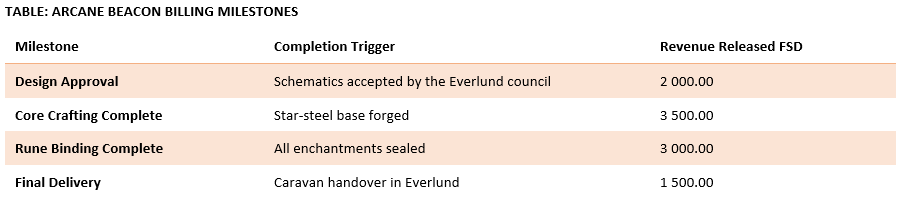

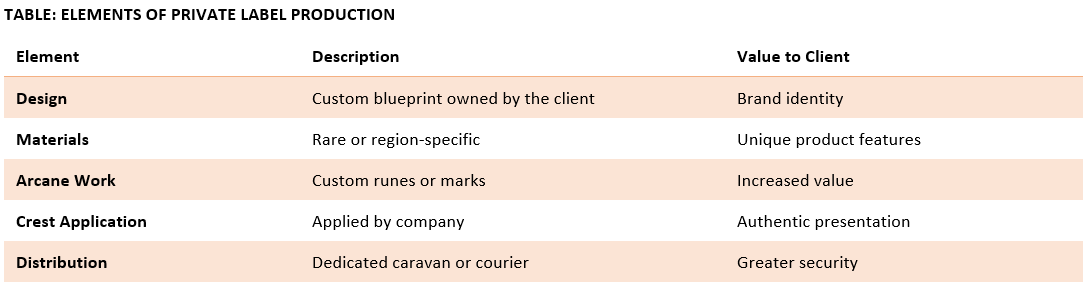


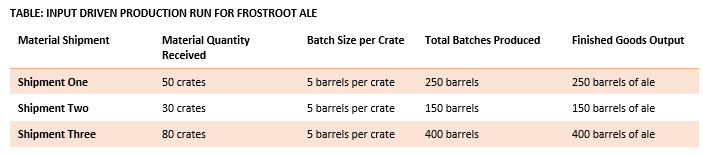


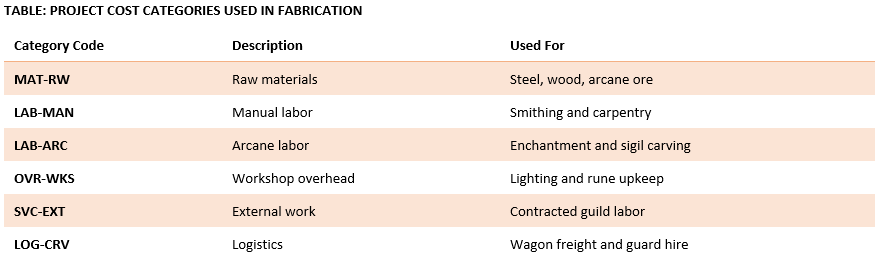

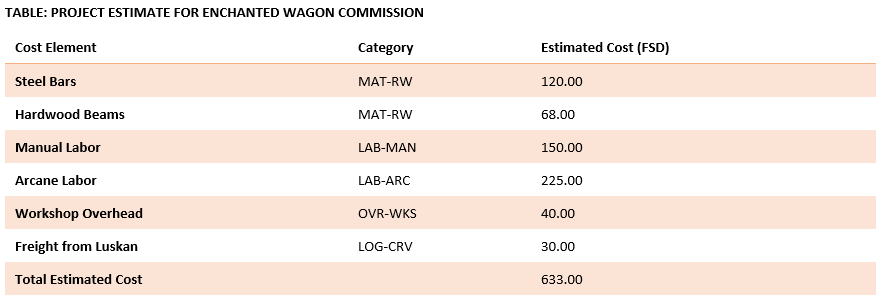





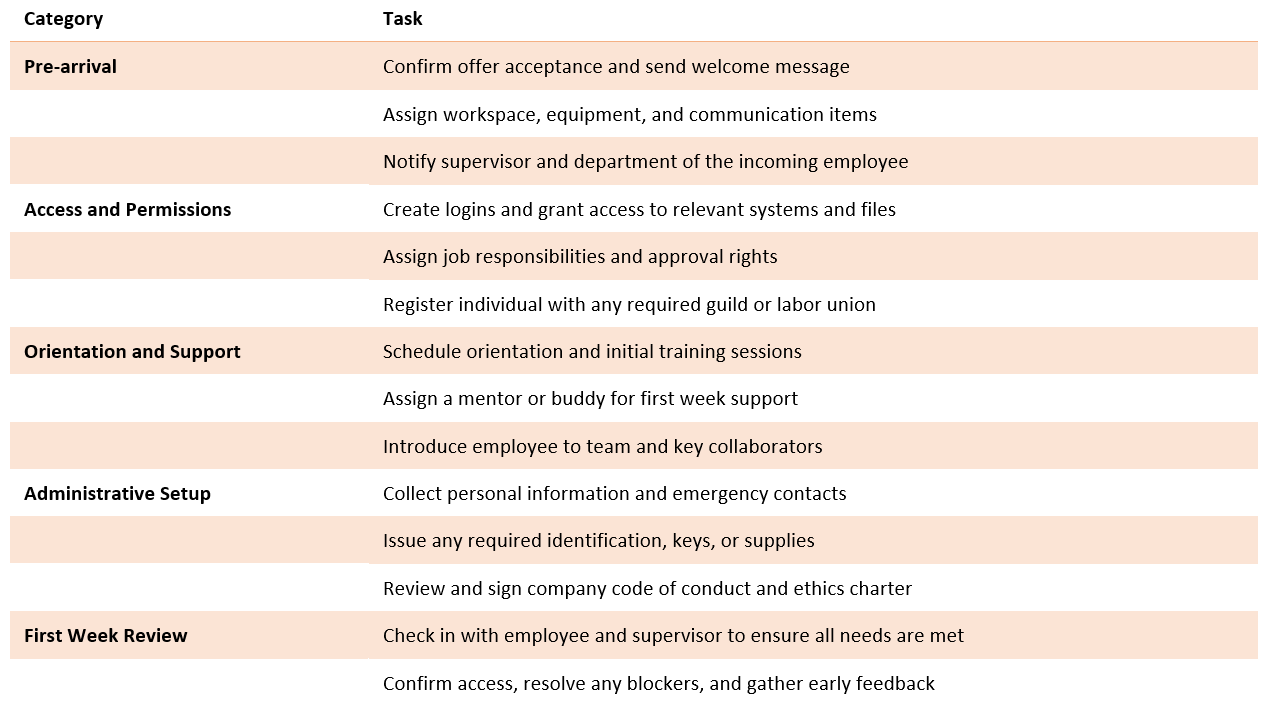


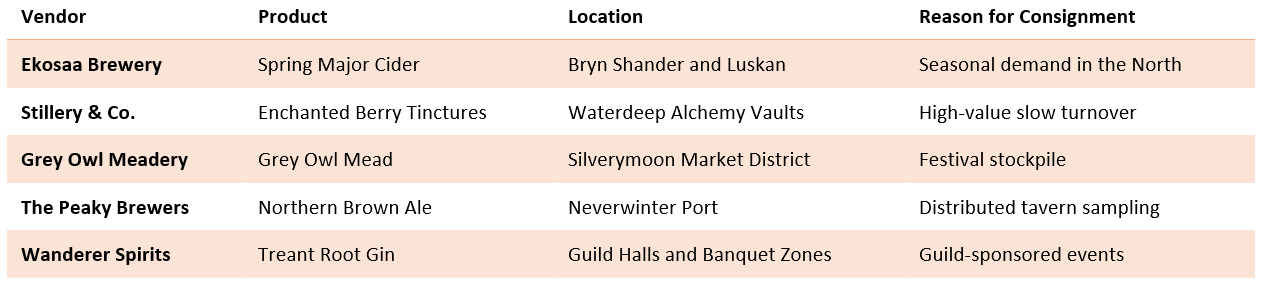
 A Tinkerers Notebook